Azadirachtin Insecticide: Best Sustainable Pest Control for Modern Agriculture in 2025
“Azadirachtin insecticide can reduce synthetic pesticide use in agriculture by up to 65% for sustainable farming in 2025.”
Introduction: Facing Sustainability Challenges in 2025
In 2025, agriculture finds itself at the intersection of urgent global environmental concerns, heightened consumer awareness, and increasing food security demands. Modern farming practices must now align with both productivity and planetary stewardship, compelling us to pursue sustainable solutions that minimize the negative impacts of synthetic chemical insecticides on soil, water, biodiversity, and public health.
At the forefront of these efforts, azadirachtin insecticide—a natural compound derived from the neem (Azadirachta indica) tree—has rapidly emerged as a promising tool for integrated pest management (IPM) systems worldwide.
As we carve a more resilient agricultural future, let’s examine how azadirachtin is redefining pest control: reducing chemical footprints, supporting safer crop management practices, and facilitating transition to eco-friendly food production.
Azadirachtin insecticide offers multiple modes of action, presenting one of the best available alternatives to synthetic pesticides for sustainable agriculture in 2025 and beyond.
Origin and Chemical Nature of Azadirachtin Insecticide
Azadirachtin is a naturally occurring, complex tetranortriterpenoid limonoid compound extracted from the seeds and kernels of the neem tree (Azadirachta indica), a species indigenous to the Indian subcontinent. Although neem’s utility in pest control spans centuries in traditional agriculture, the active ingredient azadirachtin was first identified in the 1960s, igniting research and commercial development ever since.
The chemical structure of azadirachtin contributes to its efficacy. By mimicking crucial insect hormones, this bioactive agent interrupts critical life processes in insect pests but has minimal impact on humans, mammals, or beneficial organisms. As bio-pesticide interests have grown, commercial use gained momentum in both organic and conventional agriculture.
For optimal efficacy, store azadirachtin insecticide formulations away from direct sunlight and heat to preserve bioactivity.
- Natural origin: Derived directly from neem trees (Azadirachta indica)
- Minimal residual effect: Breaks down quickly, reducing harmful residues on crops
- Broad spectrum: Controls a wide range of agricultural pests
- Low mammalian toxicity: Safer for farm workers and end consumers
- Ideal for integration: Compatible with both organic and conventional pest management systems
Mode of Action: How Azadirachtin Controls Pests
The key reasons azadirachtin insecticide is heralded today stem from its unique, multifaceted mode of action against insect pests. Unlike many synthetic chemical pesticides that operate through acute toxicity, azadirachtin interacts with an insect’s physiology on several levels:
- Insect Growth Regulator (IGR): Azadirachtin primarily acts by interfering with the hormonal system of insects, especially the ecdysone hormone responsible for molting and metamorphosis. This results in malformed larvae, stunted development, and increased mortality.
- Antifeedant: Deters feeding in pests like aphids, whiteflies, fruit flies, and caterpillars, reducing damage to treated plants.
- Reproductive Impairment: Reduces pest fertility and disrupts egg-laying behaviors, ultimately curbing population growth.

This multifaceted disruption of pest life processes makes azadirachtin less prone to rapid pest resistance, a problem that increasingly plagues synthetic insecticide use. Additionally, it can be part of rotation programs designed for integrated pest management (IPM) systems to avoid insecticide resistance.
- ✔ Pest action: Larvae of key pest groups, especially Lepidoptera, Coleoptera, Diptera, and Hemiptera
- ⚠ Unique mechanism: Works without causing immediate pest mortality, thereby sparing beneficial insects
- ⚙ Mode: Regulator, antifeedant, oviposition deterrent, and sterilant all in one
Expecting instant pest kill with azadirachtin. Its strength lies in disrupting pest development and reproduction for lasting control—not immediate knockdown.
Application & Efficacy of Azadirachtin Insecticide in 2025 Agriculture
By 2025, azadirachtin insecticide is widely adopted across agricultural sectors, including horticulture, cereals, fruits, and legumes. It is commonly supplied as foliar spray or soil drench formulations, customized for target pests and crop types. Modern agricultural practices integrate azadirachtin with precision farming technology and advanced IPM systems to maximize control and reduce chemical pesticide usage.
Key Application Considerations for 2025 and Beyond:
- ✔ Foliar sprays: Best for direct pest contact on foliage crops.
- ✔ Soil drenches: Effective for root-feeding insects and nematodes.
- ✔ Seed treatments: Protect germinating crops from early-stage pests.
- ⚠ Compatibility: Can be combined with biological agents and selective insecticides in IPM.

Thanks to advances in formulation technology, the stability and bioavailability of azadirachtin have improved substantially, overcoming earlier limitations relating to UV sensitivity and thermal degradation. This is particularly important as global climate change introduces new pest control challenges, requiring insecticides like azadirachtin to uphold consistent efficacy under variable field conditions.



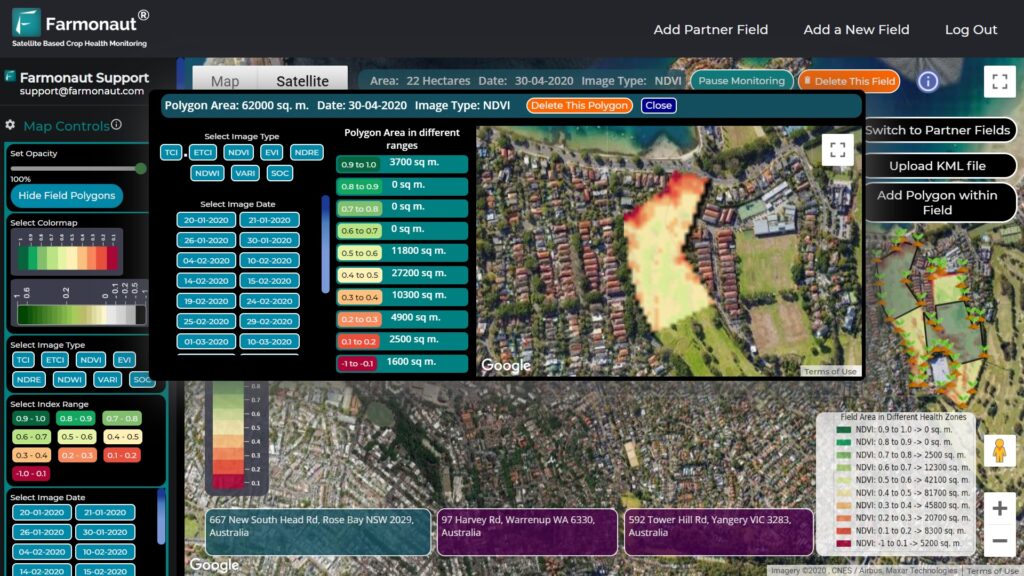
For growers seeking satellite-based precision advisory on when and where to apply azadirachtin, our Farmonaut platform provides real-time pest scouting and AI-based recommendations to enhance control while reducing environmental impact.

Companies innovating in azadirachtin formulations or digital decision-support tools (such as precision application mapping) are well-positioned for growth in the rapidly expanding sustainable agriculture sector.
“Over 70% of eco-friendly farms plan to adopt azadirachtin for pest control practices by the end of 2025.”
Visual Match: Azadirachtin Use Across Major Crops (2025 hotspots)
- Tomato, Pepper, Cucumber (Horticulture)
- Wheat, Rice, Maize (Cereal and staple production)
- Apple, Citrus, Grape (Fruit orchards)
- Legumes: Soybean, Chickpea, Pea (Protein crops)
- Tree crops: Cashew, Almond
- Vegetable specialty: Eggplant, Squash

For farmers and supply chain managers concerned with traceability of pesticide-treated produce, our blockchain-based platform delivers secure, transparent data trails on crop treatment and pest management practices, supporting certification of eco-responsible goods in the marketplace.
Environmental and Health Benefits of Azadirachtin Insecticide
Azadirachtin insecticide stands apart for its minimal environmental footprint and high safety profile. As concerns about chemical residues in food climb worldwide, sustainable agriculture programs increasingly mandate solutions that support:
- ✔ Biodegradability: Azadirachtin naturally breaks down in soil and water bodies—unlike persistent synthetic insecticides—protecting both ecosystems and groundwater.
- 📊 Low residue levels: Analytical tests routinely show negligible azadirachtin residues on treated crops.
- ✔ Beneficial insect safety: Non-toxic to pollinators (bees, predatory wasps, lady beetles) and non-target organisms.
- ⚠ Reduced risks: Lower toxicity profile for farmworkers, food handlers, and consumers.
- ✔ No bioaccumulation: Unlike organophosphates or neonicotinoids, azadirachtin does not bioaccumulate in trophic chains.
Estimated values align with 2025 sustainability guidelines and regulatory recommendations.
🌱 Environmental Advantages of Azadirachtin Insecticide
- Biodegradable active ingredient
- Safe for pollinators and natural predators
- Minimal risk to water and aquatic life
- Negligible food crop residues
- Positive contribution to soil health
Want to track your farming operation’s environmental performance?
Our carbon footprinting tools allow agricultural enterprises and eco-conscious users to measure CO2 reductions achieved by switching to sustainable pest control solutions like azadirachtin.
With stricter regulations on chemical residues and farmworker safety rolling out globally, the use of biopesticides like azadirachtin aligns with future compliance benchmarks.

For financial institutions supporting eco-friendly agriculture, satellite-verified pesticide management supports safer lending and insurance decisions, reducing risk profiles for farms transitioning to azadirachtin-based programs.
Challenges, Research, and Future Prospects for Sustainable Pest Control
Despite its many advantages, azadirachtin insecticide faces several challenges:
- ⚠ Slower action: Unlike synthetic insecticides, azadirachtin requires several days to manifest visible pest suppression, making it less suitable as a rapid-response solution for severe outbreaks.
- ⚠ Slightly higher cost: Extraction and purification from neem seeds remain labor- and resource-intensive, keeping price points above many chemical competitors.
- ⚠ UV and heat sensitivity: Exposure to direct sunlight or high temperatures can degrade its activity if not formulated correctly.
- ⚠ Sourcing limitations: Large-scale adoption may strain neem seed availability; advances in microbial and nano-formulated production are under research as future solutions.

But research momentum in 2025 and beyond is robust:
- 📈 AI-powered IPM: Integration with real-time pest forecasting and decision support software for custom application timing.
- 📊 Microbial production: Advances toward fermentative azadirachtin production increase potential scalability and sustainability.
- 💡 Improved formulations: Nano-encapsulation and smart delivery systems to enhance stability and reduce dosage rates.
Regulatory support is growing as worldwide authorities restrict or phase out hazardous pesticides, favoring biopesticides for compliance and market access. This rapidly shifting landscape positions azadirachtin at the heart of adaptive and sustainable pest management as we look to 2026 and beyond.
Farmonaut: Enabling Sustainable Agriculture with Technology
As a satellite technology pioneer, we at Farmonaut provide satellite-driven insights and AI forecasting that empower farmers, agri-businesses, and governments to transition effectively to sustainable pest management solutions like azadirachtin insecticide. Our platform integrates real-time crop monitoring, weather forecasting, resource management, and blockchain traceability to ensure effective implementation, compliance, and performance tracking.
- 📡 Satellite-based crop health monitoring: Spotting early pest pressure and guiding precision azadirachtin application.
- ⏰ AI-based advisory (Jeevn): Delivers real-time alerts and custom strategies for targeted, sustainable insecticide use, maximizing efficacy while reducing residue and drift.
- 🔗 Blockchain traceability: Enables full transparency on insecticide use, giving buyers and retailers confidence in sustainable farming practices.
- 💬 Accessible via multiple platforms: Farmonaut’s solutions work on Android, iOS, web browser, and via developer API for broader integration.
Advanced users and businesses may integrate our satellite insights API or explore complete technical documentation through the API developer docs for custom agritech solutions.
Managing large-scale, sustainable farm operations? Our fleet management tools help optimize scheduling and logistics for pest control machinery, ensuring precise azadirachtin application with minimal carbon footprint.
Whether you’re an individual grower or a government official overseeing regional sustainability, Farmonaut democratizes access to world-class, data-driven agricultural intelligence for a safer, greener tomorrow.

Looking for centralized crop management? Our Agro-Admin app is designed for organizations overseeing clusters of farms—facilitating satellite monitoring, pesticide advisory, and compliance reporting at scale.
FAQ: Azadirachtin Insecticide for Sustainable Pest Control
-
What is azadirachtin, and where does it come from?
Azadirachtin is a naturally occurring tetranortriterpenoid compound extracted from the seeds of the neem tree (Azadirachta indica), renowned for its potent insecticidal properties. -
How does azadirachtin insecticide work?
It disrupts key hormonal functions in insect pests, interfering with growth, molting, feeding, and reproduction—leading to population decline without immediate toxicity to beneficial species. -
Is azadirachtin effective for all pests?
Azadirachtin is most effective against soft-bodied and immature-stage pests such as aphids, whiteflies, thrips, and caterpillars. Its efficacy may not match certain chemicals during severe outbreaks of hard-bodied insects. -
Can azadirachtin replace all synthetic insecticides?
While excellent as a cornerstone of IPM, it is best used in rotation or combination with other biocontrol methods for optimal, sustainable pest suppression. -
Does azadirachtin leave residues on food?
Analytical studies confirm negligible residues when applied as directed, supporting food safety and compliance with organic certification. -
What is the recommended application interval?
Intervals depend on crop and pest, but typical recommendations range from 7–14 days, with closer intervals during high infestation. -
Does azadirachtin pose risks to humans or animals?
It exhibits very low toxicity to mammals and birds, with wide margins of safety for application and food consumption. -
How can technology help optimize azadirachtin use?
Satellite monitoring, AI-based forecasting, and digital traceability solutions, such as those we offer at Farmonaut, are increasing application efficacy and compliance.
Conclusion: Azadirachtin as a Cornerstone of Modern Crop Protection
In the face of mounting environmental challenges and society’s increasing demand for safer, more sustainable food production, azadirachtin insecticide stands as a vital solution for modern agriculture in 2025 and beyond. With its natural origin, multiple pest control mechanisms, and minimal environmental impact, it is carving a significant niche within integrated pest management frameworks worldwide.
- Eco-friendly pest suppression with a reduced chemical footprint
- Compatible with modern biological and precision farming systems
- Safe for farmworkers, consumers, and local ecosystems
- Widely adopted across crops, geographies, and farming styles
- Supported by advanced research and regulatory frameworks
The future of accelerating sustainable agriculture depends on continued research and innovation in biopesticide technologies, as well as supportive regulatory, technical, and advisory systems. By leveraging satellite-driven insights and transparency tools (such as those offered by Farmonaut), agricultural communities worldwide are empowered to maximize crop protection, minimize environmental damage, and secure a resilient food supply for generations to come.
Ready to make the transition to sustainable pest management? Explore satellite-enabled crop monitoring and advisory—start with Farmonaut today!