Almond Harvesting Machine: 2026 Efficiency in California
Summary: The Evolution and Impact of Almond Harvesting Machines in Modern Agriculture (2025-2026)
Almonds have become one of the most significant nut crops, particularly in thriving regions like California, Spain, and Australia. As global demand continues to increase due to the nutritional and versatile value of almonds in food and beverage industries, the efficiency and innovation behind almond harvesting machines have directly impacted the progress of orchard agriculture.
As of 2025 and moving into 2026, the almond harvesting machine doesn’t just represent a pivotal advancement—it embodies the revolution of modern agriculture, integrating artificial intelligence, smart farming solutions, and sustainability at scale. This blog explores the historical context, cutting-edge AI-driven harvesting machine models, practical benefits, current challenges, groundbreaking innovations, as well as Farmonaut’s satellite-supported approach to smarter, more resilient almond orchards.
Introduction: Almond Harvesting Machines and California’s Nut Agriculture
Almonds (Prunus dulcis) stand as one of the most lucrative and critically important nut crops globally. Particularly in regions like California—which produces over 80% of the world’s almonds, sustaining both local prosperity and international supply—every advance in harvesting and production has an immediate ripple effect across agriculture.
With the almond sector’s ever-rising global demand, continuing labor shortages, environmental pressures, and weather unpredictability, the need for smarter, more efficient, and sustainable solutions has never been greater. This has fueled tremendous progress in almond harvesting machine design and functionality, driving us into a new era of digital, AI-enriched orchard farming.



Historical Context: Labor, Mechanization, and the Need for Innovation
The origin story of the almond’s modern farming evolution is rooted in tradition, yet marked by major change. Traditionally, almond harvest required manual labor—workers would manually shake trees or pick almonds from the ground, a process that was both time-consuming and manpower-intensive. The harvest “window” is short, demanding an enormous temporary workforce that’s increasingly difficult to assemble, and exposing growers to rising labor costs and compliance burdens regarding worker welfare, safety, and environmental regulations.
The push for mechanization became urgent due to:
- ✔ Rising labor costs and shortages threatening profitability and timely harvests
- ✔ Stricter regulations regarding worker welfare
- ✔ Global demand and industry scalability requirements
- ✔ Recurrent hazards: weather, pest exposure, and crop loss risks
Key Insight
Almond production in thriving regions like California depends on rapid orchard harvesting within a limited window. Mechanized machines resolve critical labor and efficiency bottlenecks, making large-scale and sustainable farming viable in the modern agriculture era.
- 🌳 Orchard Size: California’s almond orchards average over 250 acres per farm
- 👨🌾 Labor Demand: Manual harvesting requires 15-20 workers per 100 acres
- 🔄 Turnaround Pressure: Almonds must be harvested, transported, and processed within 4-6 weeks
- ⚖️ Regulatory Shifts: New rules restrict dust, noise, and chemical exposure during harvest
- 🌎 Export Drive: Over 70% of California’s almonds are exported, increasing traceability demands
How Almond Harvesting Machines Work: Modern Trunk Shakers, Sweepers, and AI Models
Almond harvesting machines have dramatically transformed the approach to almond harvesting and production. The core mechanism involves trunk or canopy shakers—machines that attach to the tree’s trunk or main limbs, vibrate at optimal frequencies to dislodge mature nuts, and allow them to fall onto specifically designed catching frames or covers. The result? Precision, speed, and lower physical damage to the almond trees.
Primary Machine Components and Workflow
- Trunk/Canopy Shakers: These machines clamp around the base or limbs, applying quick, targeted vibration pulses tailored for each tree’s age, size, and soil condition.
- Ground Covers/Catching Frames: Protect nuts from soil contamination and minimize losses from uneven orchard terrain.
- Sweepers and Collectors: Specialized sweepers gather fallen nuts into rows, followed by collecting units that convey harvest into hoppers or trailers.
- Integrated Sensors and AI: Modern machines deploy soil sensors, weather monitoring, AI-optimized shakers, and GPS to adapt harvesting in real time.
Common Mistake
Some growers assume all almond harvesting machines function at the same efficiency. In reality, AI-driven and sensor-equipped models from 2025 onward can customize shaker vibration patterns and harvesting speed based on each tree’s needs, reducing bark damage and improving yield quality.

Almond Harvesting Machine Advancements: AI, Sensors, and Precision Agriculture in 2025-2026
The years 2025 and 2026 mark profound advancements in almond harvesting machines—models are now equipped with expansive artificial intelligence (AI), machine learning algorithms, and data-collecting sensors. These technologies are transforming orchards in California and other leading regions through data-driven, smart decision making and sustainability optimization.
Key New Features of 2025-2026 Almond Harvesting Machines
- 🤖 AI-Vibration Controls: Almond harvesting machines now analyze trunk diameter, tree health, and nut maturity via AI-optimized vibration, preventing over-shaking and reducing tree damage.
- 📡 Integrated GPS & Path Planning: Machines utilize real-time GPS data to optimize travel paths through orchards, decreasing overlapping passes and fuel consumption.
- 🌦️ Weather & Soil Sensors: Data on humidity, temperature, and soil moisture direct harvesting timing, preventing harvest during risky exposure periods or post-rain events.
- 📷 Cameras: On-board cameras identify nut drop density and harvest progress, enabling mid-session adjustments for zones with denser yields.
- ⚡ Electric/Hybrid Models: A new wave of electric and hybrid-powered harvesting machines aim to bring the sector closer to zero-emission operations and long-term sustainability.
Pro Tip
Upgrading to AI-driven almond harvesting machines helps optimize cost, fuel use, and orchard health simultaneously. Pairing AI harvesters with real-time data platforms—like those offered by Farmonaut’s Large-Scale Farm Management Tools—ensures every acre delivers its full economic and environmental potential.

Innovation in Action: Real-Time Optimization and Early Problem Detection
New almond harvesting machines equipped with AI don’t simply automate old methods; they act as ever-learning partners for growers. By synchronizing harvesting with real-time environmental data (like soil health, pest presence, and upcoming weather conditions), almond farms optimize yield production and reduce crop loss or orchard damage.
For instance, a 2026 model may postpone harvesting a section threatened by unexpected rainfall, or intensify the shake sequence for trees stressed by drought, all supported by in-orchard data and AI-driven advisory platforms.
It’s this integration—between machine, environment, and digital monitoring—that is redefining the future of almond agriculture in California, Spain, Australia, and other leading regions.

Investor Note
With AI-driven orchard machinery, California’s almond industry is on the forefront of agri-tech investment. The evolution of harvesting machines is attracting venture interest due to their productivity breakthroughs, sustainability metrics, and integration with precision ag data platforms—a future-proof trend for smart agriculture investors.
Comparative Table: Traditional vs. AI-Powered Almond Harvesting Machines (2025-2026)
| Year/Model | Automation Level | Harvesting Speed (acres/hour) | Labor Reduction (%) | Fuel/Power Consumption | Sustainability Features |
|---|---|---|---|---|---|
| Traditional (Pre-2015) | Manual/Low Automation | 1-1.5 | 0-10% | 6-8 L/acre (Diesel) | None / High Dust and Soil Impact |
| Semi-Automated (2015-2024) | Partial Automation | 2-3 | 30-40% | 4-5 L/acre (Diesel) | Some Dust Reduction, Limited Selectivity |
| AI-Driven 2025 Model | High Automation / AI-Enhanced | 4-6 | 60-70% | 2-3 L/acre (Hybrid) / 4-5 kWh/acre (Electric) | Precision Shaking, Soil/Weather Data Sync, 30%+ Dust Reduction |
| AI-Driven 2026 Model | Full Automation / Autonomous | 6-8 | 80-90% | 1-2 L/acre (Electric) | Advanced Dust Control, Selective Harvesting, Optimized Fuel, Data Integration |
Table: Comparing the evolution, efficiency, and sustainability of almond harvesting machines from pre-2015 manual methods to the full AI-driven autonomous models of 2026.
Data Insight
AI-powered almond harvesting machines enable “selective harvesting,” target only fully mature trees, and use integrated cameras to map yield variability. When paired with advanced satellite monitoring and traceability via Farmonaut Traceability Solutions, farms can seamlessly combine physical and digital data for end-to-end crop quality assurance.
Key Benefits: Almond Harvesting Machine Advancements for Farmers, Crops & Sustainability
- 🌾 Efficiency: Harvest time per acre cut by up to 70% versus manual methods, protecting nuts from weather or pest exposure.
- 🛠️ Reduced Labor Costs: Automated harvesting machines address shortages and regulatory burdens while ensuring timely harvests with less manpower.
- 🌳 Tree & Soil Health: AI-driven shaking minimizes tree damage and reduces soil compaction with precision path guidance.
- 🎯 Crop Quality: Consistent, gentle mechanical shaking preserves almond integrity, reducing cracked, dirtied, or lost nuts.
- 🌱 Sustainability: Hybrid-electric models lower emissions; data-driven scheduling reduces resource waste.
Looking to enhance orchard management and harvest optimization? Harness the power of satellite, AI, and field data via the Farmonaut Web & Mobile App—enabling growers to remotely monitor orchard health, schedule optimal harvest windows, and improve yield quality.
Developers and businesses can integrate Farmonaut’s satellite & weather API (API link, API Developer Docs), unlocking detailed, field-level data for precision farming across large-scale almond orchards.
Sustainability Insight
Sustainably managing almond orchards involves reducing carbon footprint, optimizing water use, and maintaining healthy soil. Learn more about ways to monitor and lower agriculture’s environmental impact with Farmonaut’s Carbon Footprinting Platform.

- ✔ Boosted Yield: AI models harvest at peak maturity, maximizing the volume and quality of almonds per acre.
- 📊 Data-Driven Decisions: Combining orchard sensors with Farmonaut’s analytics delivers actionable yield, weather, and soil reports.
- ⚡ Energy Savings: Electric and hybrid engines reduce both carbon output and operational expenses.
- ⚠ Reduced Risk: Real-time data minimizes crop loss from weather, soil, or pest events.
- 🌐 Global Traceability: Digital tracking improves quality assurance and supply-chain transparency for export markets.

Challenges, Innovations, and Access to Almond Harvesting Machine Technology
While almond harvesting machines drive progress, several challenges remain:
- 💰 High Initial Costs: Cutting-edge AI models in 2025-2026 require substantial investment, limiting rapid adoption by small-scale farmers.
- 🛠️ Complex Maintenance: Greater reliance on digital and AI components increases the need for technical know-how and maintenance capacity.
- 🌍 Access & Equity: Mechanization can create disparities unless affordable and scalable solutions emerge for all orchard sizes—especially in developing regions.
- 🛑 Regulatory Barriers: Rules concerning noise, dust, and chemical exposure continue to change, requiring adaptive machine designs.
Innovation is overcoming these hurdles as manufacturers offer modular, solar-powered harvesting solutions, and promote leasing or machinery-sharing models. Some companies even utilize blockchain-based product traceability frameworks to guarantee the authenticity, origin, and safety of almonds for global consumers. Discover more about secure blockchain traceability at Farmonaut Traceability.
Investor Pro Tip
It’s not just about new machine sales—investing in AI upgrades, analytics, and data-driven advisory platforms can rapidly pay off as California’s almond acreage continues to expand and sustainability pressures intensify.
Future Trends: Complete Data Integration, Electric Harvesters, and Autonomous Orchards
By 2026 and beyond, almond harvesting machines are predicted to further revolutionize orchard management through:
- 🚜 Autonomous Navigation: Full-autonomy will allow harvesting machines to operate day and night, precisely mapping routes for every tree and minimizing soil compaction.
- 📡 Total Data Fusion: Integration with orchard-wide data—NDVI, soil moisture, weather, pest activity—for end-to-end precision harvest scheduling and orchard management.
- 🔐 Blockchain Traceability: Digital certification of every almond’s journey from tree to package, responding to growing consumer and regulatory demands for transparency.
- ⚡ Zero-Emission Machinery: Full electrification, paired with solar charging, is expected to become standard for both large- and small-scale farms.
These advances make it possible for growers to optimize every stage of almond production, mitigate risk, boost sustainability, and respond swiftly to changing weather, soil, and market conditions.
-
🌱 Precision Harvesting:
Targeting only trees at maximum maturity for minimal waste. -
📲 Satellite Monitoring:
Overseeing orchard health and stress via NDVI and Farmonaut’s real-time insights. -
🕒 Weather-Driven Scheduling:
Harvesting aligned with optimal weather and soil moisture windows. -
🏷️ Blockchain-Enhanced Traceability:
Smarter logistics and supply-chain reliability for global markets.

Farmonaut’s Role in Advancing Almond Orchard Efficiency
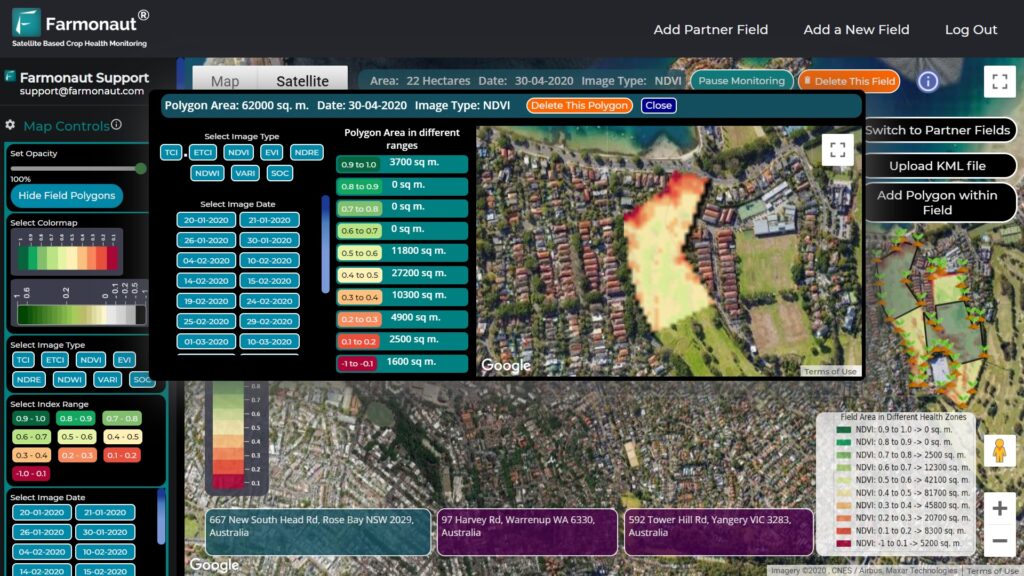
At Farmonaut, we champion precision agriculture by leveraging satellite technology, AI, and data analytics to empower almond growers and orchard managers. Our platform integrates satellite-based monitoring for key agriculture indicators such as soil health, NDVI, and crop vigor. Using these insights, farmers can schedule almond harvesting at the moment of peak maturity—reducing losses due to weather, ensuring uniform nut quality, and protecting trees from unnecessary stress or mechanical damage.
With tools like our Jeevn AI Advisory System, growers receive personalized, real-time advice on harvest timing, irrigation, and pest management based on environmental data and evolving weather forecasts. Through blockchain-based traceability, we also support the California almond industry’s compliance, export, and branding mandates with transparent, secure tracking from farm to marketplace.
For financial security, our satellite-based verification unlocks streamlined access to crop loans and insurance built around actual field conditions—not just paperwork. Our scalable solutions fit both large-scale commercial operations and family-run orchards, breaking cost barriers and democratizing smart farming across California, Spain, Australia, and other emerging almond regions.
For advanced fleet and logistics support during almond harvesting season, explore our Farmonaut Fleet Management System—streamlining machine and crew deployment across orchards.
Climate-conscious growers can calculate and benchmark their environmental impact using our carbon footprinting platform—a key tool for meeting California’s emerging agri-sustainability requirements.

Key Insight
Pairing AI-powered almond harvesting machines with data-centric platforms like Farmonaut’s enables seamless digital-to-field workflows. This synergy gives growers a competitive edge—balancing productivity, compliance, and environmental stewardship well into 2026 and beyond.
FAQ: Almond Harvesting Machine and Smart Farming Innovations
- What is the main function of an almond harvesting machine?
- Almond harvesting machines use mechanical trunk or canopy shakers to dislodge mature nuts from trees, collect them efficiently, and reduce harvest times while minimizing labor and crop damage.
- How does AI improve almond harvesting in 2025-2026?
- AI enhancements allow machines to adjust vibration strength, route planning, and harvesting schedules based on real-time weather, soil health, and tree maturity data for optimal efficiency and lower environmental impact.
- How do modern almond harvesting machines support sustainability?
- By incorporating electric/hybrid drivetrains, precision path planning, and selective harvesting, these machines reduce emissions, minimize soil compaction, and preserve long-term orchard health.
- What are the biggest challenges for small almond farmers adopting AI harvesting technology?
- The greatest barriers are high upfront equipment costs, need for technical skills, and evolving regulatory landscapes. Scalable, shareable, and modular harvesting solutions are being developed to improve accessibility for smaller growers.
- How does Farmonaut support almond growers with harvesting and orchard management?
- We provide affordable satellite-based monitoring, real-time AI-driven agricultural advisory, blockchain-powered traceability, and resource management platforms to optimize harvest timing, yield quality, and sustainability in almond orchards.
Common Mistake
Many growers focus solely on mechanical upgrades without investing in data platforms. Leveraging a satellite and AI-powered system such as Farmonaut’s ensures maximum ROI from every almond harvesting machine investment—both for short-term yields and long-term orchard health.
Conclusion: Almond Harvesting Machines—The Fusion of Technology, Efficiency, and Sustainability for 2026 and Beyond
The evolution of the almond harvesting machine stands as a beacon of agricultural progress in the 21st century. California’s almond industry—along with orchard regions in Spain, Australia, and beyond—has become a proving ground for smart mechanization, AI integration, and digital farming solutions.
As we approach 2026, almond harvesters are more than machines—they are vectors for efficiency, sustainability, and resilience in a changing world. With each advance in AI-driven harvesting models, real-time environmental data, and modular machine design, growers are empowered to optimize yield, reduce costs, minimize risk, and strengthen environmental stewardship.
At Farmonaut, we remain committed to making these innovations accessible globally, democratizing satellite insights and digital advisory, and supporting the next era of orchard agriculture—rooted in data, powered by technology, and truly future-ready.