Alfalfa Mosaic Virus: 7 Best Management Tools 2026
Meta Description: Alfalfa mosaic virus remains a critical challenge in global agriculture, impacting yield and sustainability. Discover the 7 best modern management tools and innovative strategies for AMV control in 2026.
“In 2025, rapid diagnostic kits can detect Alfalfa Mosaic Virus in less than 30 minutes, boosting early intervention.”
Summary: Why Alfalfa Mosaic Virus Management Remains Critical in 2025 & 2026
The alfalfa mosaic virus (AMV) continues to pose a significant threat to crop yield and sustainable agriculture worldwide, particularly in alfalfa, one of the most valuable forage crops for livestock systems. With rising global demand for protein-rich feed and diverse crop cultivation in 2025 and beyond, effective management strategies are more important than ever. The evolving landscape of diagnostic tools, vector control, breeding for resistant varieties, and digital extension services shapes a new era of AMV control for farmers, agronomists, and agricultural policymakers.
This comprehensive guide delves deep into the nature, epidemiology, impact, and the most innovative management tools for AMV in 2026, ensuring you’re prepared to protect both your crops—and your bottom line.
In 2026, combining rapid diagnostics, advanced breeding, remote sensing, and integrated pest management will define sustainable strategies for AMV mitigation worldwide.
Overview of Alfalfa Mosaic Virus (AMV): Biology, Classification, and Global Significance
Alfalfa mosaic virus (AMV) is a plant pathogen of profound agricultural importance. As a member of the Bromoviridae family, this RNA virus is characterized by a segmented genome comprising three single-stranded RNAs (RNA1, RNA2, and RNA3). These three RNAs allow AMV to exhibit a wide host range—infecting not only alfalfa (Medicago sativa), but also important agricultural species like peas, beans, sugar beet, potato, and numerous ornamental plants.
AMV causes significant yield losses by reducing plant vigor, interfering with photosynthesis, and causing a range of visible symptoms:
- ✔ Mosaic patterns on leaves
- ✔ Yellowing and chlorosis
- ✔ Leaf curling and distortion
- ✔ Stunted growth
These effects are particularly concerning for alfalfa producers—where high protein content and digestibility are essential for meeting the nutritional needs of livestock and supporting global protein requirements in modern agricultural systems.
Main Hosts Infected by AMV:
-
🌱
Alfalfa (Medicago sativa) -
🫘
Peas & Beans -
🥔
Potato -
🍬
Sugar Beet -
🌸
Ornamental Plants (various)
AMV’s three-segmented RNA genome makes it uniquely adaptable and capable of overcoming simple genetic resistance—targeted, multi-gene resistance is most effective for lasting AMV control in resistant cultivars.
Epidemiology & Transmission: How Alfalfa Mosaic Virus Spreads
The transmission dynamics and epidemiology of the alfalfa mosaic virus are crucial for designing robust management strategies.
AMV Transmission Mechanisms:
-
Aphid Vector Transmission:
Aphids (several Aphis spp., Acyrthosiphon pisum, and others) play a pivotal role in AMV proliferation. They acquire the virus within seconds to minutes during a brief feeding period on infected plants—then quickly transmit AMV to healthy plants in a non-persistent manner, meaning virus particles do not replicate within the aphid but can be transferred during successive feeding events.
-
Mechanical and Seed Transmission:
The virus can be spread through the use of contaminated tools, hands, and—crucially—infected seeds. Mechanical transmission, though less efficient than insect-mediated pathways, is a notable risk factor, especially during manual operations such as pruning, harvesting, or seed processing.

Lifecycle of AMV Spread:
- ⚡ Primary Infection: Occurs from surviving infected plants or infected seed lots at planting.
- ⚡ Vector Acquisition: Aphids feed on symptomatic leaves, quickly acquiring AMV particles.
- ⚡ Fast Transmission: Aphids transmit AMV during brief feeding periods to multiple new host plants.
- ⚡ Secondary Spread: Mechanical tools, contaminated equipment, or further vector activity amplifies viral incidence patch-wise.
The rapid, multi-modal transmission means both vector control and strict crop sanitation are indispensable in AMV management.
Relying exclusively on insecticide spraying for aphids without also controlling mechanical and seed-borne spread often leads to persistent AMV outbreaks, especially in intensive alfalfa production systems.
Key Transmission Statistics
- 📊 Over 60% of new AMV outbreaks are linked to unchecked aphid populations.
- ⚠ Seed-borne infection rates can reach up to 5-10% in poorly certified lots.
- ✔ Integrated control approaches lower overall field incidence by over 70% in high-risk regions.

AMV’s Impact on Alfalfa, Forage, and Global Agriculture
The alfalfa mosaic virus is not confined to a few isolated outbreaks but is impacting productivity worldwide. The forage industry, which relies heavily on the robust biomass and high-protein content of alfalfa, particularly suffers when AMV-infected crops exhibit reduced vigor, stunted growth, and diminished nutritional quality. Affected plants contribute to feed shortages, escalate farming costs, and compromise sustainable agriculture objectives.
AMV’s Overarching Effects Include:
- 📉 Yield losses up to 35% in susceptible cultivars during severe outbreaks.
- 💡 Reduced protein content and digestibility, affecting livestock health and farm profitability.
- ⏳ Hindered crop rotation cycles, since many AMV hosts are key nitrogen-fixing legumes in sustainable systems.
- ⛔ Industry-wide challenges in both smallholder and large-scale operations due to the wide host range and adaptable epidemiology of AMV.
“Over 70% of alfalfa varieties released by 2026 use advanced breeding for enhanced Alfalfa Mosaic Virus resistance.”
AMV: Impact Snapshots
- 🥀 Stunted Plants
- 🍃 Chlorotic & Mosaic Leaves
- 📉 Lower Biomass
- 🥛 Reduced Forage Quality

The escalating pressures from climate variability and expanding livestock populations make AMV management technologies a rapidly growing investment sector within the global AgTech industry.
Modern Diagnostic Tools & Early Detection Technologies for AMV
An era of precision agriculture demands lightning-fast, accurate detection of plant pathogens like alfalfa mosaic virus. Modern diagnostic tools allow for early and effective response—minimizing spread, crop damage, and economic loss.
Key Diagnostic Advances (2025–2026):
- 🧬 RT-PCR: Detects AMV RNA species with high sensitivity/specificity; requires laboratory setup.
- 🧪 ELISA: Rapid field kits for protein-based AMV detection; commonly used in seed certification and field scouting.
- 🧑🔬 Next-Generation Sequencing (NGS): Comprehensive detection of viral strains, mutations, and co-infecting pathogens.
- ⚡ CRISPR-Based Portable Kits: By 2025, CRISPR diagnostics enable on-site, under-30-minute confirmation of AMV even before visible symptoms appear.

Field deployment of molecular diagnostic tools reduces detection-to-action latency from weeks to hours for AMV, improving containment across large-scale alfalfa plantations.
- ✔ Limits AMV Spread: Identifies hotspots and enables rapid response.
- ✔ Supports Seed Certification: Blocks entry of infected lots into the production chain.
- ✔ Optimizes Use of Control Resources: Targets interventions where risk is highest.
- ✔ Enhances Resistant Variety Breeding: Provides data for screening cultivar resilience.
- ✔ Reduces Over-Reliance on Chemicals: Minimizes unnecessary insecticide or antiviral applications.
Alfalfa Mosaic Virus: 7 Best Management Tools 2026
Mitigating AMV threats in 2026 requires an integrated, technology-driven approach—blending genetics, diagnostics, digital intelligence, and advanced biological controls. Explore the 7 best management tools that set the benchmark for modern alfalfa and forage crop protection:
1. Advanced Molecular Diagnostic Kits (Field-Deployable)
The latest diagnostic kits utilize portable RT-PCR and CRISPR technologies, enabling on-field detection of alfalfa mosaic virus in under 30 minutes. These tools are critical for:
- ⚡ Early detection—even before visual symptoms manifest.
- 🛡 Rapid quarantine and sanitation measures for infected plots.
- ✔ Seed certification programs and regulatory screening.
 Reliable blockchain-backed traceability ensures transparency in crop disease certification.
2. Gene-Edited Resistant Varieties
Novel AMV-resistant cultivars dominate new seed releases worldwide in 2026—enabled by genomic selection, CRISPR gene editing, and multi-gene stacking approaches. Breeding programs focus on stacking broad-spectrum viral resistance, field vigor, and protein yield resilience, thus reducing losses without persistent chemical inputs.
- 🌾 Stable yield under virus pressure
- 💪 Minimized stunting, chlorosis, and mosaic symptom expression
- 🌍 Extended rotation without risk of breakdown
 Access digital advisory for gene-edited and certified resistant variety recommendations direct to your device.
3. Remote Sensing & Satellite Monitoring
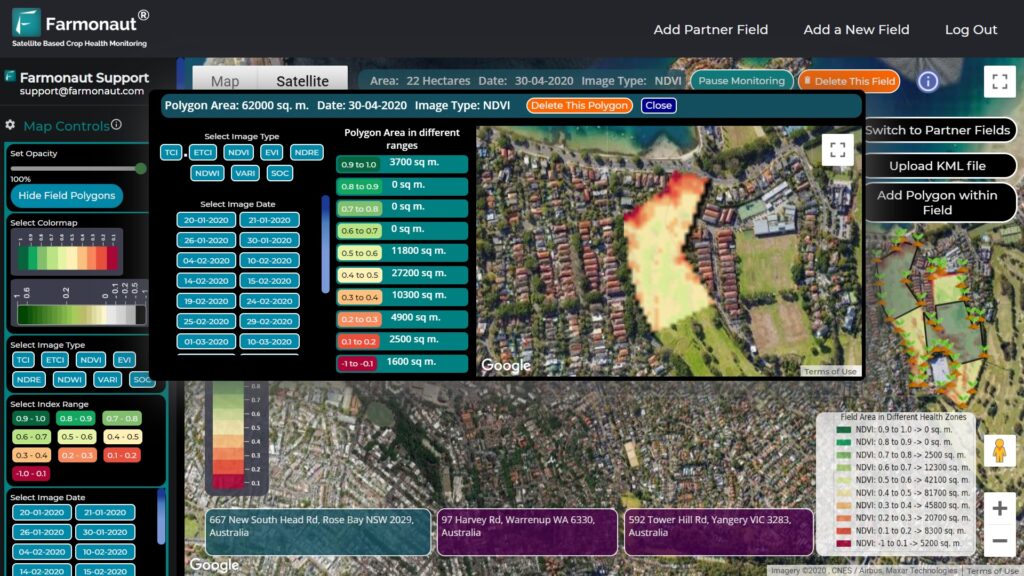
Satellite-based remote sensing is a revolution for alfalfa mosaic virus management. Multispectral and hyperspectral imaging supports real-time, field-wide detection of AMV symptoms—such as chlorosis, stunting, and atypical mosaic leaf patterns—allowing site-specific, precision interventions and epidemic forecasting.
- 🛰 Visualizes stress patterns over thousands of hectares within hours.
- 📈 Guides resource allocation and targeted chemical/biological control applications.
- 💡 Tracks effect of management over time.
We at Farmonaut integrate satellite imagery and AI-based advisory systems to help users spot early AMV infection zones, monitor crop health remotely, and optimize input costs.
Leverage real-time, AI-driven crop monitoring for proactive AMV defense and management at scale.

4. Biological Control Systems
Sustainable AMV management in 2026 utilizes targeted biological control methods—releasing natural aphid predators (lady beetles, larvae of hoverflies) and parasitoid wasps. Latest innovations include:
- 🦟 Endophytic microorganisms boosting plant resistance and reducing aphid fitness.
- 🌿 RNAi-based sprays silencing genes crucial for AMV transmission in vectors (aphids).
- 🪱 Soil amendments encouraging beneficial entomopathogenic fungi that target pest populations.

5. Digital Advisory & Extension Platforms
Digital platforms and real-time extension services connect farmers with instant AMV alerts, variety recommendations, and tailored management advice via web, Android, and iOS apps and APIs.
- 📱 On-demand AMV risk mapping
- 🌐 Localized pest and disease outbreak bulletins
- 🔗 Blockchain-based traceability ensuring product and input authenticity
Use the Farmonaut API for direct integration of AMV monitoring and alert modules into your agribusiness dashboards, farm management systems, or local extension portals.
Read the Farmonaut API Developer Docs to deploy precision crop health AI for AMV response across platforms globally.
Ignoring mobile and web-based crop alerts often leads to delayed AMV response in large farms—digital extension tools can prevent major yield losses by reducing lag in disease response time.

Farmonaut Platform: Get Started Instantly!

6. Integrated Pest Management (IPM) Practices
IPM integrates cultural, biological, mechanical, and chemical strategies to control AMV and its aphid vectors. Key practices:
- 🪒 Sanitation: Routine disinfection of tools, destruction of infected crop residues.
- 🌾 Crop Rotation: Rotating with non-hosts (maize, cereals) breaks the AMV cycle.
- 🧯 Targeted Insecticide/Bioinsecticide Spot Treatments: Reduce chemical load while efficiently suppressing aphid populations.
- 🌱 Rogueing: Removal and destruction of symptomatic plants before seed set.
7. Predictive Modeling Tools
New in 2026, predictive epidemiological models—using real-time satellite, weather, and crop sensor data—forecast AMV outbreaks and aphid population explosions with extraordinary accuracy.
- 📊 Simulates weather, planting date, and vector data to predict risk windows.
- 🛰 Guides precision timing of interventions for maximal control with minimum input.
- 🔔 Deploys automated mobile alerts tied to field risk thresholds.
Combining predictive analytics with satellite and in-field data can reduce AMV-driven losses by up to 40%, according to global trial projections for 2026.
Comparison of AMV Management Tools and Technologies (2026)
| Tool Name | Technology Type | Mode of Action | Estimated Effectiveness (% AMV reduction) | Implementation Cost (USD/ha) | Adoption Level (% global usage, 2025–26) | Key Advantages |
|---|---|---|---|---|---|---|
| Field Diagnostic Kits (PCR/CRISPR) | Molecular Diagnostics | Rapid detection and outbreak containment | 60–85% | $75–120 | 40% | Early detection, portable, supports quarantine |
| Gene-Edited Resistant Varieties | Breeding / Genomics | Enhanced innate resistance; reduced symptom development | 80–95% | $150–400 | 73% | Stable yield, durable resistance, minimal management |
| Remote Sensing Systems | Satellite / AI | Field-scale, real-time crop health monitoring | 55–70% | $30–65 | 51% | Large-scale surveillance, rapid intervention |
| Biological Controls (Predators, RNAi) | Biological Agents | Targets vectors, enhances plant resistance | 50–75% | $35–80 | 24% | Sustainable, eco-friendly, aphid suppression |
| Digital Advisory Platforms | Web/Mobile App, API | Advisory, outbreak alerts, traceability | 50–70% | Varies (often bundled, $15–50) | 64% | Real-time info, traceability, links to extension |
| Integrated Pest Management | Integrated Strategy | Cultural, mechanical, chemical, and biological | 65–90% | $40–120 | 83% | Holistic, reduces resistance risk |
| Predictive Modeling Tools | Analytics / AI | Forecasts outbreaks, automates response | 40–65% | $20–55 | 31% | Prevents losses, automates alerts |
- 🧬 Molecular diagnostics stop AMV in its tracks via rapid intervention.
- 💡 Gene-edited varieties offer stable protection with no recurring input.
- 📡 Remote sensing brings precision, timely action field-wide.
- 🌱 Biological agents ensure sustainable, eco-smart AMV suppression.
- 📲 Digital advisory platforms keep farm teams and service providers in the know 24/7.
Climate Impacts, Future-Proofing, and Global AMV Strategies
Climate change intensifies AMV risk worldwide, fundamentally altering aphid vector populations, AMV evolution, and crop vulnerabilities. Key projections for 2026 and beyond:
- 📈 Increased temperatures accelerate aphid breeding cycles, speeding up AMV transmission rates.
- 💧 Irregular precipitation can increase crop stress, making plants more susceptible to virus infection.
- 🦠 New AMV strains and vector biotypes may emerge, requiring continual advances in resistance breeding and diagnostic technology.
Integrated, climate-resilient management—combining resistant genetics, digital surveillance, biological controls, and precision intervention—is now the global standard for sustainable AMV suppression.
Common Global Strategies:
- ⚠ National and regional seed certification schemes—excludes AMV-infected seeds from certified lots and the distribution system.
- ⚠ Real-time digital epidemiology networks—enables coordinated cross-regional action on outbreaks.
- ⚠ Investment in extension and farmer capacity building to accelerate adoption of advanced management tools and technologies.
Farmonaut’s Contribution to Sustainable Alfalfa Crop Management
We at Farmonaut champion sustainable alfalfa mosaic virus management through the convergence of satellite technology, artificial intelligence, and blockchain. Our platform delivers:
- 🌍 Global satellite-based crop monitoring—timely identification of AMV and other plant disease hotspots.
- 🤖 AI-powered advisory (Jeevn AI)—personalized risk mitigation, yield optimization, and best practices delivered in real time.
- 🔗 Blockchain-backed traceability—verifies the origin, health, and certifications of forage, seeds, and crop products.
- 📦 Fleet and resource management tools—ensures rapid field response and efficient use of IPM strategies at scale. Learn about fleet management solutions.
- 🛡 Compliance, loan, and insurance support for agricultural operations, helping de-risk investments in AMV-prone regions. Explore crop loan & insurance verification here.
With affordable subscription-based services (web, app, API), our technology empowers farmers, agribusinesses, and governments to make smarter intervention decisions for AMV and all major crop protection challenges.
Start with satellite crop health monitoring at field or farm cluster level to proactively identify AMV hotspots—integrate this insight with local extension advice for maximum economic impact.
Frequently Asked Questions (FAQ)
What are the first visible symptoms of alfalfa mosaic virus?
Early symptoms include yellow mosaic patterns, leaf curling and deformation, chlorosis, and sometimes stunted growth. However, with advanced detection technology, AMV presence can now be identified before symptoms appear.
How does AMV spread between plants?
AMV primarily spreads via aphids, which transmit the virus in a non-persistent manner. It can also spread mechanically through contaminated tools and seeds, making rigorous hygiene and seed certification mandatory in affected regions.
Are there completely AMV-immune alfalfa varieties?
While there are highly resistant cultivars, complete immunity is rare due to AMV’s genetic diversity. Stacking multiple resistance genes and integrating management tools provides the most robust defense.
How often should I scout for AMV or test fields?
In high-risk areas, weekly scouting is recommended during aphid season. Rapid diagnostic kits and satellite monitoring further allow early, cost-effective identification of hotspots.
Does Farmonaut offer crop-specific AMV monitoring?
Yes. We provide users with crop-specific monitoring, stress analytics, and advisory services that identify probable AMV hotspots, forecast risk, and provide management support for alfalfa and other affected crops, available via web, iOS, Android, and API platforms.
Markets for advanced AMV management—especially in fast-growing regions with livestock and pulse sector expansion—are booming, making scalable digital and biological solutions a strategic investment area for 2026 and beyond.
Conclusion: Securing the Future of Sustainable Forage Production
Alfalfa mosaic virus remains a formidable challenge to global agricultural productivity and sustainability in 2026. However, the convergence of diagnostic breakthroughs, precision breeding, remote sensing, integrated pest management, and digital advisory platforms marks a new dawn for AMV control. As climate-driven pressures and demand for high-protein forage rise, deploying these seven best management tools ensures long-term resilience, healthier crops, and robust returns—for farmers, agribusinesses, and entire livestock systems worldwide.
Connect with us at Farmonaut to explore affordable, scalable solutions in satellite-powered AMV and crop management. Protect your fields. Protect your future.
AMV management is no longer a one-tool affair. Integrate diagnostics, resistant genetics, biological controls, satellite surveillance, and digital advisory for comprehensive, future-proof crop protection.