AI-Powered Sustainable Agriculture: 7 Advances for 2026
Introduction: AI, Sustainability, and Agriculture in 2025
Artificial intelligence (AI) is rapidly reshaping agriculture, forestry, and land management worldwide as we enter 2025 and look ahead to 2026. Leveraging data, cutting-edge models, and precision systems, AI is enabling sustainable practices that boost crop yields, enhance resilience, and optimize resource management.
Farmers and land stewards now have access to AI-powered technologies that blend satellite imagery, machine learning-driven crop forecasting, remote sensor networks, and automated robotics. These systems are transforming how we address:
- Input use: Reducing fertilizer, water, and pesticide waste through precision agriculture and targeted interventions;
- Risk management: Providing early warnings for disease, weather, or nutrient deficiencies;
- Environmental stewardship: Enabling better soil health, carbon accounting, sustainability compliance, and biodiversity protection across agricultural and forestry operations.
For 2025 and beyond, sustainable AI in agriculture is not only about boosting productivity—it’s about meeting resource constraints, lowering risk, preserving capital, ensuring regulatory compliance, and minimizing environmental losses. As climate change, population growth, and resource scarcity intensify, AI-driven sustainability is paramount for smallholders, large farms, and forestry managers alike.
This article explores seven major advances in AI-driven sustainable agriculture and forestry, focusing on their application, impact by 2026, and guidelines for practical adoption.
AI-powered systems are now accessible—even on mobile devices—opening new opportunities for farmers in remote regions to harness data-driven decisions and precision management.

Seven Key Advances in AI for Sustainable Agriculture by 2026
What are the most impactful AI-powered advances that will reshape agriculture and forestry by 2026? Based on recent technological trends and the 2025 context of environmental stewardship, we outline the following seven innovations:
- 🛰️ AI-Driven Precision Agriculture: Leveraging multispectral drone and satellite data for mapping field variability and optimizing resource application within fields.
- 🌱 Crop Forecasting & Phenotyping: Using machine learning to predict yields, disease risks, and nutrient deficiencies for targeted, sustainable interventions.
- 🤖 Robotic Harvesters and Autonomous Field Machines: Employing robotics and AI for efficient, round-the-clock operations in farms and orchards.
- 🌳 AI-Based Forestry Management: Using remote sensing, drones, and data-driven models for sustainable logging, growth monitoring, and biodiversity preservation.
- 🪨 Mineral & Soil Health Insights: AI-enabled mapping of soil and mineral suitability, supporting regenerative land management post-mining or disturbance.
- 🔁 Circular & Regenerative Systems: Integrating waste and byproduct streams into nutrient cycling and carbon reduction.
- 🔒 Transparent Data, Compliance, and Traceability: Blockchain and AI support for logging, regulatory compliance, and transparent resource management. Learn how traceability creates value for farm businesses.

Comparative Advances Table: AI-Powered Innovations for Sustainable Agriculture (2026)
| AI Innovation | Application Area | Estimated Impact by 2026 | Sustainability Benefit | Relevance for Forestry |
|---|---|---|---|---|
| Precision Field Mapping | Crop monitoring, variable-rate application | 20–40% reduction in fertilizer & pesticide usage | Resource conservation, lower runoff | Moderate (supports precision planting & fertilization) |
| AI Crop Forecasting & Disease Prediction | Yield prediction, disease warning, pest management | Up to 15% reduction in crop loss, +10% yield stability | Minimized losses, chemical use reduction | Yes (pest & disease models in forest ecosystems) |
| Autonomous Robotics | Harvesting, weeding, field operations | 10–30% lower labor costs, 24/7 operation, timely harvests | Reduces labor risk, optimizes harvest windows | Low (application limited in forestry, but rising) |
| Forestry AI Data Systems | Canopy mapping, forest inventories, reforestation | 15–30% reduction in overharvesting, +40% biodiversity monitoring | Ecosystem preservation, carbon accounting | High (core for selective logging, conservation) |
| Soil & Mineral Health AI Insights | Soil mapping, mineral site reclamation | +25% improvement in restoration, erosion risk lowered | Soil health, land stewardship | Yes (applies to disturbed forests, reforestation) |
| Circular AI-Managed Waste Systems | Waste integration, composting, nutrient cycling | Up to 30% reduction in agricultural waste | Circular economy, emission reduction | Moderate (biochar/composite use in forestry) |
| Transparent AI-Driven Traceability | Carbon/logging data, compliance verification | 100% auditable logs; supports market access via certification | Market trust, compliance, fraud reduction | Yes (regulatory clarity for timber & carbon markets) |
You can access satellite-based, AI-powered monitoring tools for your farms or forests on mobile and web via Farmonaut’s app. No complex setup needed!



1. AI-Driven Precision Agriculture — Mapping, Monitoring, and Reducing Inputs
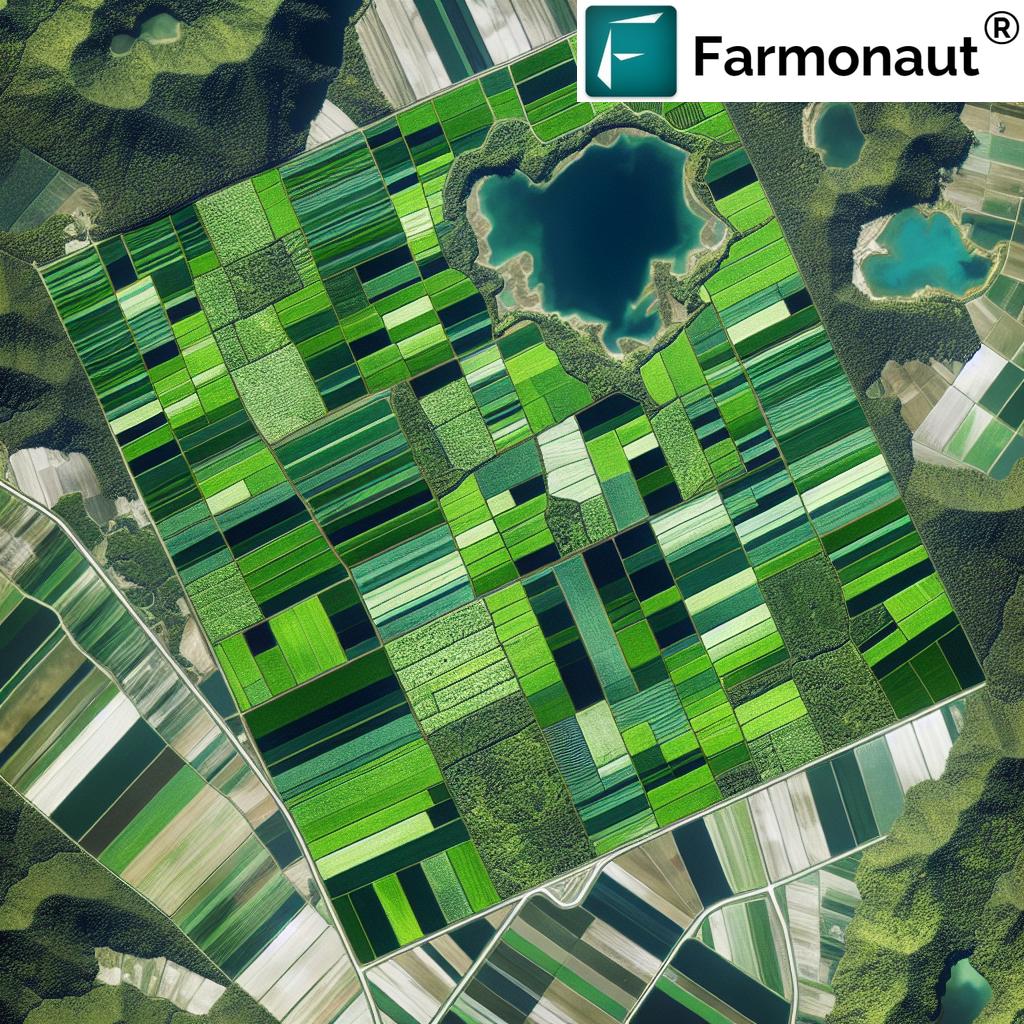
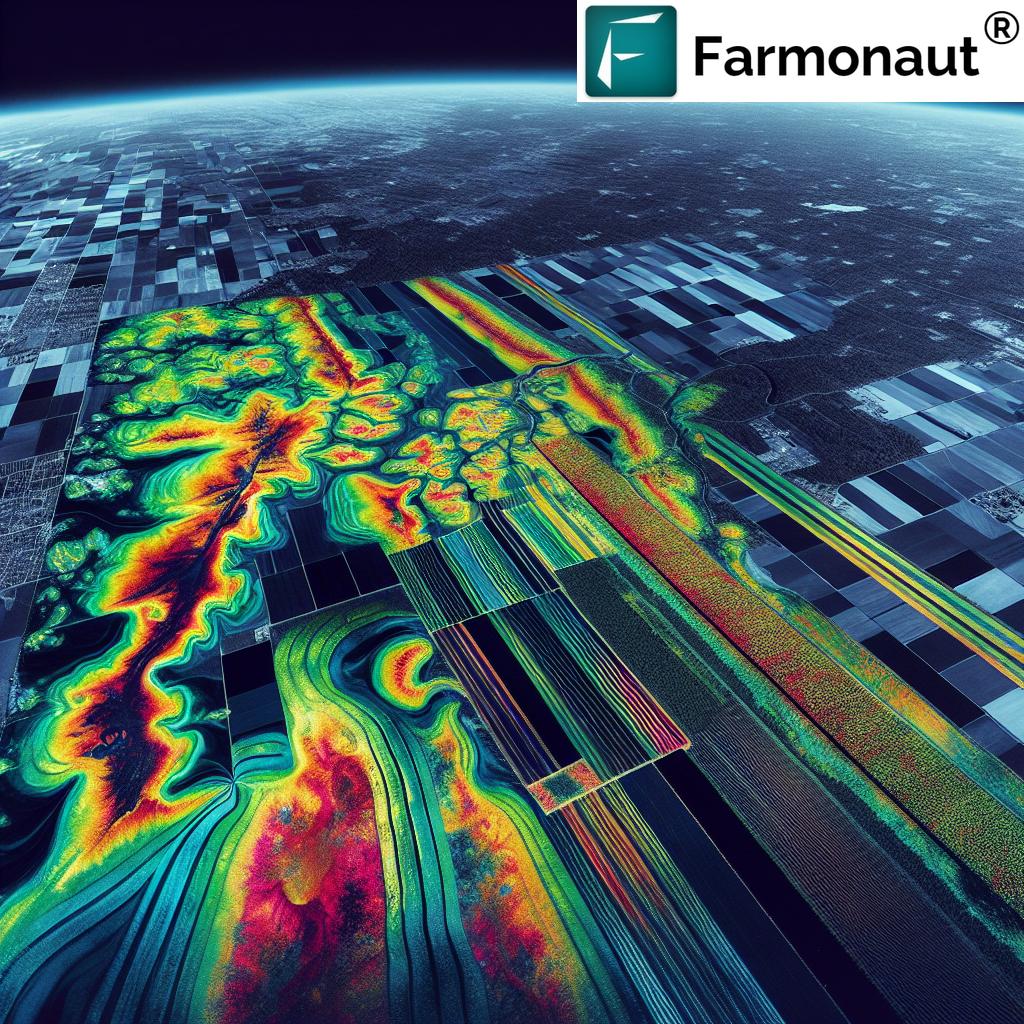
Precision agriculture is at the heart of AI’s revolution in sustainable farming. AI algorithms analyze multispectral drone, satellite imagery, and soil sensors to map variability within fields. These tools identify regions of high/low soil health and crop vigor so fertilizer, irrigation, and pesticides can be tailored (variable-rate application).
- ✔ Key benefit: 20–40% reduction in agrochemical and water usage, majorly lowering runoff and environmental impact.
- 📊 Data insight: Smallholders see productivity improvements by allocating their inputs where needed most, without overuse.
- ⚠ Risk or limitation: Sensor infrastructure/data access can be a bottleneck in developing regions.
Implementation guide: Satellite-driven management platforms make it possible for farms of all scales to harness these efficiencies.

2. AI Crop Forecasting, Phenotyping & Early Intervention
Today’s machine learning models predict not just basic yields, but also weather patterns, soil nutrient levels, and risks from disease or pests. By combining historical weather, real-time satellite and sensor data, AI systems enable early warnings for:
- ✔ Yield shortfalls (before harvest);
- ⚠ Disease outbreaks;
- 🌿 Nutrient deficiencies;
- 📊 Capital preservation through timely, targeted interventions.
Emerging genomics-aware AI can even predict which crop varieties are most climate adaptable, supporting resilience.

- ✔ Key benefit: Minimizes losses, boosts yield stability.
- 📊 Data insight: Links plant phenotyping (using remote sensing) to farm management plans.
- ⚠ Risk or limitation: Reliable, localized data is critical for accurate model prediction.
Discover carbon footprinting and compliance reporting—an essential tool for future-ready, responsible agriculture.
3. Robotic Harvesters & Autonomous Field Machines
Computer vision, AI-driven guidance, and robotics are driving the automation of field operations. Autonomous tractors, weeders, and robotic harvesters allow operations to continue 24/7, particularly vital for large-scale farms and high-value orchards. Reinforcement learning helps machines guide action in dynamic field conditions.
- ✔ Key benefit: Saves labor costs, increases harvest windows, and enables timely interventions to avoid crop loss.
- 🤖 Robots handle repetitive, risky, or labor-intensive field tasks—improving safety and predictability.
Although uptake is fastest on large operations, scalable, AI-assisted tools are also emerging for smallholders.

By 2026, robotic agriculture will be a $30B+ market, with significant investment flowing toward AI-powered harvesters and automated resource management, especially in regions facing labor shortages.
4. Forestry Management With AI Data, Drones, and 3D Sensing
Forestry is seeing a paradigm shift from rough, manual inventories to AI-based, high-resolution models:
- 🛰️ Drones and LiDAR scan forest canopy structure and composition;
- 🌲 AI estimates timber volume, tree species, and detects disturbance (fires, pests, disease);
- 🌱 Informing sustainable harvesting, reforestation planning, and biodiversity preservation across forestry landscapes.
Data-driven forestry enables selective logging, ecosystem-based management, and carbon accounting for global timber and reforestation markets (explore advanced mapping options via satellite-based forest advisory).

5. AI-Powered Soil and Mineral Health Insights
In regions affected by mining or intensive disturbance, AI integrates satellite, drone, and in-situ soil sensors to map soil chemistry, structure, and suitability for revegetation. These platforms monitor erosion, tailings storage, facility stability, and support reclamation plans that meet regulatory and conservation standards.
- ✔ Key benefit: Improves soil health and sustainability post-mining, supporting responsible resource extraction and land restoration.
- 📊 Data insight: AI automates suitability assessments for adaptive revegetation across changing landscape conditions.
Find out how digital tools improve resource and fleet management for operations involving multiple locations and machinery.
6. Circular and Regenerative Agriculture Systems With AI
The shift to regenerative systems is driven by AI’s ability to manage waste streams, coordinate composting, biochar production, and optimize on-farm nutrient cycling. Such closed-loop, circular systems benefit both agriculture and forestry by enhancing soil health, reducing emissions, and increasing long-term resilience.
- 🔁 Waste reduction: Up to 30% less agricultural and forestry waste.
- 🌎 Climate smart: Supports on-farm carbon sequestration and sustainable land stewardship.

Focusing only on yield and ignoring resource efficiency or soil health can erode long-term farm resilience. Sustainable success depends on balancing output with robust environmental stewardship.
7. Transparent Data, Compliance, and Traceability With AI
- Satellite and AI-based traceability tools enable end-to-end visibility for crops, logs, or harvested material.
- Blockchain-backed records provide real-time, auditable logs for input use, harvesting, and site access.
- This transparency reduces fraud, enhances market access, and is crucial for accessing finance or certification (explore how satellite verification speeds up loan and insurance approvals).
Such systems boost farmer and forest manager trust in digital operations and reduce administrative workloads.

- ✔️ Carbon accounting for regulatory compliance;
- ✔️ Traceability from field to market;
- ✔️ Privacy and data security for farmers;
- ✔️ Automated logging and smart reporting;
- ✔️ Reduced paperwork and risk of compliance error.
Our traceability platform unlocks these features for businesses managing agriculture or forestry certification needs.
Benefits: Sustainable, Efficient, and Resilient Farming & Forestry
How AI Advances Empower Agriculture, Forestry, and Resource Management
- ✔ Sustainability and resource efficiency: Precise input use and closed-loop systems reduce chemical loads, conserve water, and nurture soil health for long-term farm and ecosystem viability.
- ✔ Resilience to risk and climate: Predictive maintenance, adaptive planting, and proactive disease or weather warnings bolster yields and economic stability, especially for smallholders.
- ✔ Transparency and compliance: AI data logging and carbon accounting enable certification, market access, and trust for sustainable produce and timber.
- ✔ Economic resilience: Stabilizing yields, reducing waste, and optimizing logistics increase profit margins for diverse operations.
Affordable AI and remote sensing tools are now accessible even to smallholders, helping bridge equity gaps and adding sustainability capacity at the grassroots.
Implementation: Challenges & Practical Considerations for Sustainable AI Adoption
- Robust Data Ecosystems:
- Reliable data streams—soil sensors, satellite imagery, equipment telemetry—are crucial.
- Standardized formats and interoperability simplify integration into diverse systems.
- Find Farmonaut’s API for integrating advanced analytics or explore the API developer documentation.
- Equity and Access:
- Scalable pricing, mobile-friendly tools, and local-language interfaces bring AI within reach for rural users.
- Tailored models consider distinct crop/livelihood patterns and constraints.
- Model Governance and Trust:
- Clear, auditable AI models with transparent recommendations build user trust.
- Ongoing field validation ensures recommendations remain accurate as weather, climate, and land use change.
- Data Privacy and Collective Stewardship:
- Respecting privacy and maintaining clear data ownership policies safeguards farmers and resource users.
- Responsible sharing allows for collective learning in landscapes with overlapping land tenure.
- Capacity Building and Co-Design:
- Training programs and extension services ensure practical adoption, even in low-tech regions.
- Engaging farmers and resource managers in tool design aligns AI with local priorities.
Successful adoption often starts with remote monitoring for a few fields or forest blocks—then scales as confidence in AI grows.
Looking Ahead: Future Directions for AI in Sustainability (2026 & Beyond)
- Edge AI and In-Field Robotics: As on-device intelligence matures, farmers and forestry teams will access real-time recommendations without waiting for cloud-processing—critical for remote or low-connectivity landscapes.
- Multi-Omics and Soil Microbiome: Integrating soil genomics, microbiome analysis, and AI will vastly improve nutrient management decisions and disease suppression precision.
- Climate-Smart Hybrids: AI-guided breeding will help select resilient crops or tree species for unpredictable climate futures in both agriculture and forestry.
- Advanced Carbon Markets: Transparent, AI-tracked carbon accounting will be vital for sustainable certification, finance, and climate goals.
- Regulatory Tech: Automated compliance, smart licensing, and embedded environmental monitoring are set to become standard for responsible resource management worldwide.
Our large-scale management solutions support organizations embracing these future trends.
The next wave of sustainable agriculture and forestry innovation will be driven by a combination of advanced AI models, widespread remote sensing, policy incentives, and direct engagement with farmers and resource managers.
Farmonaut: Using Satellite & AI to Empower Sustainable Agriculture
At Farmonaut, we are committed to democratizing satellite technology and artificial intelligence for sustainable agriculture, forestry, mining, and infrastructure management. Our platform delivers:
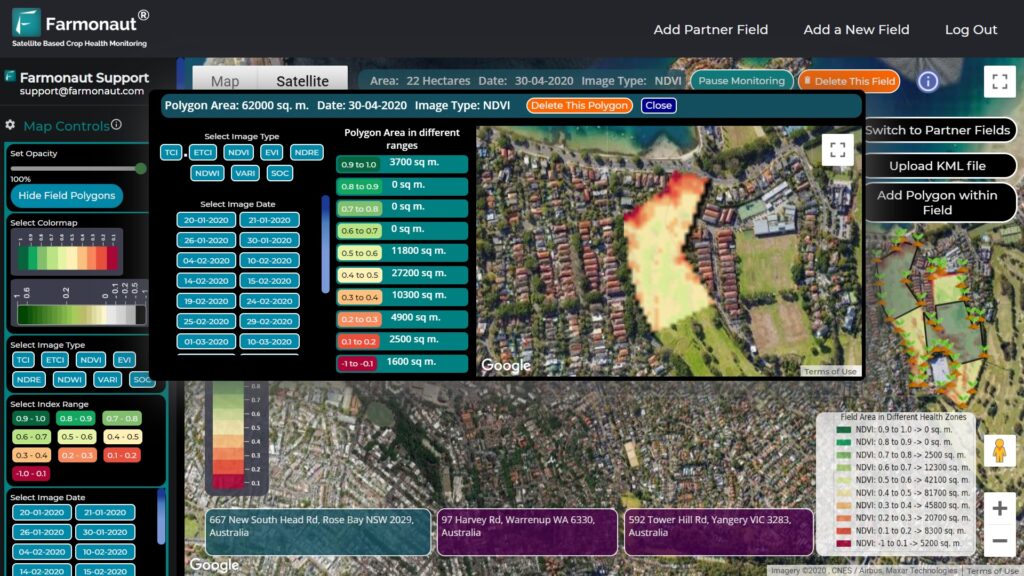
- 🛰️ Satellite-Based Monitoring: Multispectral imagery for NDVI, crop health, and soil analysis.
- 🤖 Jeevn AI Advisory: Real-time farm insights and weather forecasts.
- 🔗 Blockchain Traceability: For compliance, transparency, and secure logging in agriculture, mining, and supply chains.
- 🚜 Fleet & Resource Management: Optimizing machinery, tracking assets, and lowering operational costs.
- 🌱 Environmental Impact Tracking: Real-time carbon footprinting to support responsible practices and regulatory compliance.
We offer affordable subscriptions and accessible APIs for farms, businesses, governments, and developers. With web, Android, and iOS options (see all access options here), we enable everyone—from smallholders to multinational operations—to thrive in a data-powered, sustainable future.
FAQs: Sustainable AI in Agriculture and Forestry (2025-2026)
- What is AI-powered sustainable agriculture?
- AI-powered sustainable agriculture refers to the use of artificial intelligence, data analytics, and machine learning to enhance productivity and resource efficiency while supporting environmental stewardship in farming, forestry, and land management.
- How will AI models change agricultural practices by 2026?
- By 2026, AI models will forecast crop yields, detect disease and nutrient deficiencies early, optimize input use, and support robotic/agronomic decision-making, resulting in higher resilience, reduced environmental impact, and greater data transparency.
- Why is traceability important in sustainable agriculture?
- Traceability provides transparency from seed to shelf and field to forest, ensuring product authenticity, supporting regulatory compliance, and enabling responsible stewardship and fair access to global markets.
- Can smallholders benefit from AI-driven agriculture?
- Yes. Affordable, mobile AI tools allow even small farmers to access precision field mapping, crop forecasts, resource optimization, and traceability systems.
- How do I get started with AI and satellite-based agriculture?
- Start by evaluating your field or forest via Farmonaut’s easy-to-use app. Review satellite insights, monitor vegetation/soil health, and scale up with API integration as needed.
Conclusion: Building Sustainable Futures with Artificial Intelligence
The era of AI-powered sustainable agriculture and forestry is accelerating. By 2026, as adoption of advanced models, robotics, and traceable data systems grows, the global food and resource economy will be better equipped to produce more with less, preserve our natural landscapes, enable compliance, and sustain livelihoods for the long term.
With robust tools now available for farms, forests, and mining landscapes of every size, stakeholders have unprecedented means to achieve both economic and environmental goals. As technology evolves, embracing data-driven stewardship is not just an opportunity—it’s a necessity for resilience, compliance, and sustainability.
Ready to start? Connect with leading satellite and AI solutions to support your sustainable journey.