Agriculture Labor: Key Issues & Solutions for 2026
“Over 60% of global child laborers work in agriculture, highlighting urgent ethical and sustainability challenges in farming practices.”
- Introduction: The Critical Role of Agriculture Labor
- Key Labor Issues in Agriculture: The 2026 Landscape
- Child Labor Agriculture: Persistent Realities & Global Impact
- Migrant Labor, Informality & the Wage Gap
- How Technology Is Reshaping Farming Labor
- Sustainability & Ethical Practices: Toward Fair Conditions
- Comparison Table: Labor Issues, Prevalence & Sustainable Solutions
- Farmonaut: Empowering Fair & Sustainable Agriculture
- Key Callouts: Insights, Tips & Notes
- Visual Lists & Power Bullet Points
- FAQs on Agriculture Labor & Solutions
- Conclusion: Building a More Equitable Agricultural Future
Introduction: The Critical Role of Agriculture Labor
Agriculture labor constitutes the backbone of the global food system. Whether we consider expansive farmland in the United States or smallholder plots in Sub-Saharan Africa, the workforce engaged in planting, tending, harvesting crops, and managing livestock is the engine that sustains food security, economic stability, and rural livelihoods. As we advance into 2026, labor in agriculture remains one of the most critical, yet complex, components of the food production system.
Yet, beneath the field’s surface lies a web of labor issues — persistent inequities, precarious employment, and social rights violations — that require urgent attention. Seasonal employment, informal work agreements, lack of social security, and limited access to healthcare and education continue to define realities for many agricultural workers, especially in developing regions. Increasing calls for labor rights, sustainable practices, and ethical labor standards are pushing us to reevaluate the future of farming labor as technology and climate change reshape the landscape.
This article explores the multifaceted nature of agriculture labor, focusing on pressing labor issues, the role of child labor, technological advances, and sustainable pathways to a fair, resilient future for all workers involved in agriculture worldwide.

Key Labor Issues in Agriculture: The 2026 Landscape
As agriculture enters 2026, a new set of challenges and opportunities emerge for its labor force. Let’s explore the critical labor issues in agriculture that shape both productivity and sustainability within rural economies and the global food system:
- ✔ Vulnerable Employment: Widespread seasonal and informal employment trap millions in cycles of uncertainty, with limited or no access to job stability, health benefits, or legal protections.
- ⚠ Wage Inequality & Underpayment: Underpaid and often unregulated wages persist, especially among migrant and temporary farm workers.
- 📊 Unsafe Working Conditions: Agriculture consistently ranks as one of the most hazardous sectors, exposing workers to harmful pesticides, dangerous machinery, and extreme weather.
- ⚠ Prevalence of Child Labor: Child labor in agriculture is rampant, with children facing hazardous conditions and loss of educational opportunities.
- ✔ Limited Social Security: Few farm workers enjoy social protections, access to healthcare, or formal contracts, especially in low-income and developing regions.
- 📊 Migrant Worker Exploitation: Transitory laborers face housing insecurity, wage theft, discrimination, and barriers to legal recourse.
- ⚠ Gender Inequality: Women in agricultural labor frequently experience wage disparities, unsafe conditions, and lack of land rights.
- ✔ Technology Displacement Risks: Rising mechanization and digitalization may reduce low-skill jobs and exacerbate rural unemployment without inclusive policies.

The Multifaceted Nature of Agricultural Labor
The agriculture labor sector is primarily manual, especially in developing countries where mechanization remains limited. Laborers frequently migrate within and across regions, following planting and harvesting cycles, contributing to highly fluctuating dynamics in local labor markets. The informal nature of farm work increases vulnerability and limits access to basic workers’ rights.
Child Labor Agriculture: Persistent Realities & Global Impact
Child labor in agriculture remains an enduring challenge globally. According to the International Labour Organization (ILO), over 60% of all child laborers worldwide are employed in agriculture. Their involvement is often hidden in informal labor markets, especially in rural regions where monitoring and enforcement are weak.
The involvement of children in hazardous farm work directly jeopardizes their physical and mental health, hampers educational development, and perpetuates cycles of poverty. Children are exposed to dangerous machinery, toxic pesticides, extreme weather, and strenuous physical tasks — often without adequate rest or protection.
- Drivers of Child Labor: Poverty, lack of alternative livelihood options for families, cultural acceptance of child work, limited educational facilities, and ineffective labor law enforcement.
- Global Hotspots: South Asia (India, Bangladesh), Sub-Saharan Africa, Latin America, and Southeast Asia remain regions with the highest rates of child labor in agriculture.
- Recent UN/ILO Reports: Projects highlight that, unless intensified efforts are made, millions of children will **still** be engaged in farm labor well into 2026 and beyond.

Migrant Labor, Informality & the Wage Gap
The mobility of agricultural laborers, especially as migrant workers, presents a set of unique labor issues in agriculture.
- 📦 Seasonal Migration: Every year, millions of workers migrate to follow planting and harvesting seasons, relying on unpredictable, short-term employment.
- 🏚 Poor Living Conditions: Migrant workforce often face unsafe, overcrowded housing, with limited access to clean water, sanitation, and healthcare.
- 📉 Wage Exploitation & Inequality: Many migrant laborers face unfair wages, long hours without overtime, and little or no recourse for disputes.
- 🚫 Lack of Legal Protection: As informal workers, migrants lack access to social security nets, insurance, or legal representation and can be vulnerable to abuse or forced labor.
- 👩🌾 Gender Disparities: Migrant women are especially exposed to labor discrimination, harassment, and wage gaps.

Comparison Table: Labor Issues, Estimated Prevalence & Sustainable Solutions
| Labor Issue | Estimated Prevalence in 2026 | Affected Regions/Markets | Sustainable Solution / Best Practice |
|---|---|---|---|
| Child Labor | ~60% of agri child laborers globally | South Asia, Africa, Latin America | School feeding programs, ILO standards, parent income support, legal enforcement |
| Low Wages / Underpayment | ~70% of farmworkers | Global, especially Asia & Africa | Fair Trade certification, minimum wage legislation |
| Unsafe Working Conditions | High (top 3 hazardous sectors worldwide) | Low-income & emerging markets | PPE access, mechanization, safety audits, training |
| Migrant Worker Exploitation | ~40% of farm labor is migrant in some regions | Europe, US, Middle East, India | Legal contracts, housing standards, union representation |
| Gender Disparity | Women earn 35% less on average | Worldwide | Inclusive hiring, pay equity, leadership support |
| Technological Displacement | Rising trend in developed countries | North America, Europe, China | Reskilling, digital literacy training, inclusive tech adoption |
| Lack of Social Security | 80%+ of informal workers | Africa, Asia, Latin America | Agricultural social insurance, mobile-based payouts |
“By 2026, an estimated 70% of farmworkers will require access to fair wage and safety standards in sustainable agriculture.”
Sustainability & Ethical Practices: Toward Fair Conditions
Strong sustainability and ethical labor standards are now central to responsible agriculture. As global consumers and authorities increase calls for fairness, transparency, and accountability, both large agribusiness and smallholder farms are being pushed to raise their labor standards in 2026:
- Fair Wage Commitments: Pressures mount worldwide to close the gap between minimum wages and living wages for all farming laborers.
- Worker Safety & Health: Mandatory PPE, chemical safety audits, and climate adaptation training are growing best-practices.
- No-Child-Labor Certifications: Food brands and supply chains are increasingly requiring strict compliance with ILO child labor standards and third-party verification such as Fairtrade and Rainforest Alliance.
- Inclusive Labor Policies: Equity initiatives target gender, migrant status, and rural youth, supporting access to education, skill-building, and farm leadership.
- Environmental Responsibility: Sustainability certifications often require responsible water use, soil health management, and carbon footprint reductions. For solutions, see Farmonaut’s Carbon Footprinting platform built for sustainable farm management and compliance.

How Technology Is Reshaping Farming Labor
In 2026, technology stands as a double-edged sword in agriculture labor. Breakthroughs in automation, AI, and satellite-based monitoring offer answers to many persistent labor issues in agriculture, but also present concerns around rural employment and social equity.
- 🤖 Automation & Mechanization: AI and robotics reduce human exposure to hazardous jobs, increase efficiency, and address labor shortages—yet risk displacing low-skilled laborers without proper digital upskilling.
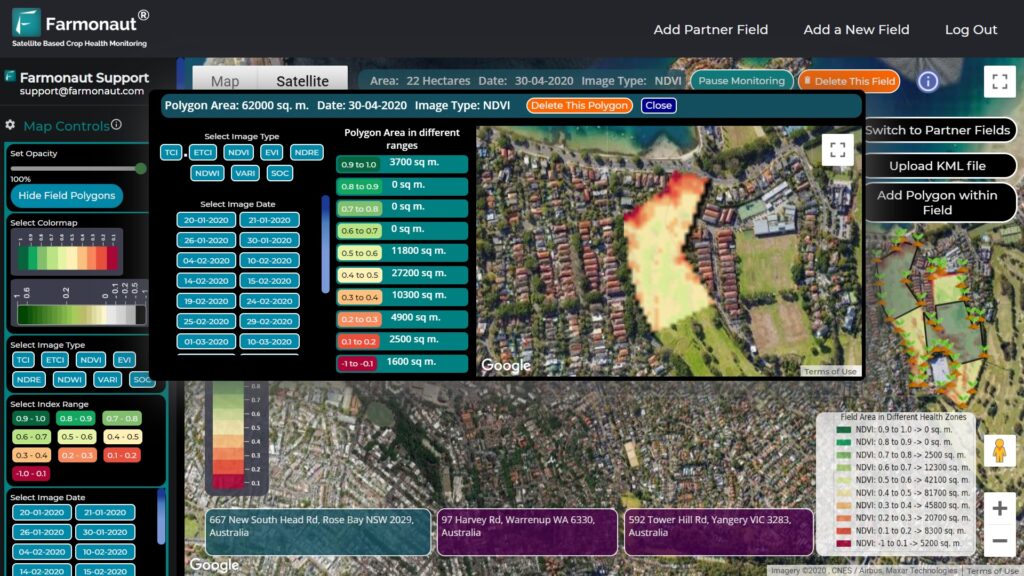
- 🛰 Satellite Monitoring: Remote crop and field analysis empowers farm managers to optimize labor allocation, improve worker safety, and monitor compliance with labor standards. For instance, Farmonaut’s satellite-based tools enable near real-time crop health and resource management for all farm sizes, supporting both productivity and operational efficiency.
Explore Farmonaut’s Large Scale Farm Management platform for advanced mapping, farm oversight, and efficient labor planning. - ⛓ Blockchain Traceability: Next-generation supply chains utilize blockchain to record labor practices, verify child-labor-free status, and incentivize ethical work conditions.
Discover how Farmonaut’s Product Traceability solutions increase trust and trace supply chains. - ⚡ Digital Advisory & AI: Mobile-based decision support systems, like the Jeevn AI system by Farmonaut, help farm owners implement best practices in labor allocation, sustainability, and compliance—no matter the scale.

Farmonaut: Empowering Fair & Sustainable Agriculture
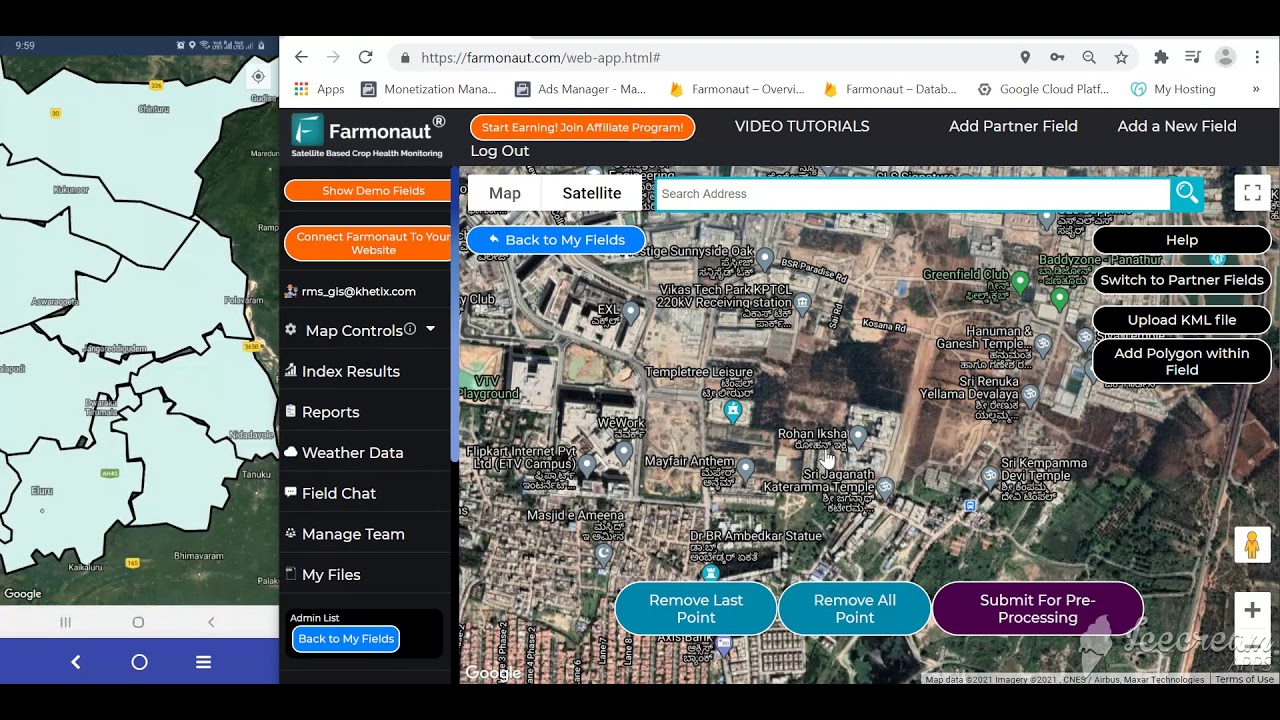
As a global satellite technology leader, we at Farmonaut are committed to helping shape a more ethical and sustainable direction for agriculture labor in 2026 and beyond. Our comprehensive, satellite-driven solutions integrate real-time monitoring, AI-based advisories, blockchain traceability, and resource management—all designed to boost productivity, ensure compliance, and empower agricultural stakeholders from field to finance.
Whether you are a farmer seeking smarter workflow planning, an enterprise managing large-scale field operations, or a financial institution requiring transparent, verified data for crop loans and insurance, our services increase your resilience, compliance, and worker welfare.
- 🌾 Real-Time Field Monitoring: Track crop health, plan harvesting schedules, and allocate labor efficiently using multispectral satellite imagery.
- 🔗 Blockchain Traceability: Verify every stage of your supply chain—ensuring ethical labor standards and transparency for end consumers. See our product traceability module.
- 📈 AI-Driven Advisory: Use the Jeevn AI system for weather forecasts, resource management, and compliance with labor best practices.
- 🌍 Environmental Impact Assessment: Our carbon footprint tracking tools enable sustainable farm management. Learn about our carbon footprinting solutions.
- 🚜 Fleet & Workforce Management: Optimize logistics and ensure worker safety with our satellite-based fleet management platform. Explore fleet management solutions.
- 💸 Access to Finance: Secure loans and insurance with satellite-verified data. See our crop loan & insurance solutions.



Developers & Integrators:
Explore the Farmonaut API and access in-depth guides from our API Developer Documentation for seamless integration with your agricultural or environmental technology stacks.
Start using Farmonaut’s Satellite Agriculture Platform today to:
- ✔ Enhance field mapping
- 📊 Optimize resource allocation
- ⚡ Automate record-keeping and compliance reporting
- 🛰 Increase visibility over conditions and crop cycles
- 🌱 Adopt sustainable, data-driven approaches for resilient labor management
Looking for sustainable expansion in plantation crop or forest management? Check out our Plantation & Forest Advisory tools—empowering communities to balance environmental, labor, and economic goals.
Want scalable, affordable access to satellite-driven farm insights?
For individuals, businesses, or governments, choose a subscription below to fit your needs:
Key Callouts: Insights, Tips & Notes
Visual Lists & Power Bullet Points
Main benefits of adopting ethical labor practices in agriculture:
- ✔ Boosts Quality & Productivity—Healthy, skilled laborers deliver better crop yields and reduce losses
- ✔ Reduces Reputational & Legal Risks—Certifications and transparent labor records build trust with buyers and consumers
- ✔ Paves the Way for Technological Adoption—Informed, healthy workers are better able to adopt and benefit from advanced agricultural technologies
- ✔ Improves Community Development—Wages spent locally support rural schools, clinics, and infrastructure, catalyzing social development
- ✔ Grows Future Opportunities—Education and skills-building combat the cycle of poverty and create a pipeline for next-generation farm leaders
Key factors worsening labor issues in agriculture:
- 📉 Persistent Informality—No written contracts, cash payments, and unreported work.
- 🌍 Rapid Climate Change—Increasing weather unpredictability and extreme events disrupt labor patterns.
- 💰 Global Wage Stagnation—Declining purchasing power for agricultural workers compared to other sectors.
- 📚 Lack of Education Access—Rural youth forced into labor instead of attending school.
- 🚫 Weak Law Enforcement—Limited inspection and sanctioning capacity in remote rural areas.
Top Sustainable Solutions for Labor Issues in Agriculture (2026)
- 🌱 Adopt robust minimum wage and overtime standards
- 💚 Certify against child labor and enforce transparency in hiring
- 🌍 Offer mobile-based insurance and healthcare to informal workers
- 🛰 Utilize satellite & AI technologies for proactive labor monitoring
- ⚖️ Promote union participation and worker councils where legal
Critical Metrics for Monitoring Labor Conditions in Agriculture
- 📈 Worker turnover rate per season
- 🛡 Safety training completion percentage
- 💲 Average daily wage vs. regional living wage
- 📚 Child school enrollment rate on associated farms
- 🌾 Percentage of certified fair-trade acreage
FAQs on Agriculture Labor & Solutions
What are the most pressing labor issues in agriculture as of 2026?
The top issues include persistent child labor agriculture, low wages, unsafe working conditions, lack of job security, gender disparities, and vulnerable status of migrant workers. Technology-driven displacement and limited access to healthcare, education, and legal protections remain major stumbling blocks worldwide.
How is technology transforming agricultural labor today?
Technology, from advanced mechanization to real-time satellite-based monitoring and blockchain traceability, is revolutionizing crop management, resource use, and workforce planning. This can reduce hazardous work, boost productivity, and improve record-keeping for labor rights compliance—though care must be taken to not increase job precarity for low-skill workers.
Why is child labor especially prevalent in agriculture?
Child labor in agriculture is driven by poverty, lack of social security, weak enforcement, and limited access to education for rural youth. Widespread informal work arrangements and cultural acceptance in some regions further exacerbate the problem.
What role do supply chain certifications play in improving farming labor conditions?
Third-party certifications like Fairtrade and Rainforest Alliance now frequently require audits of labor practices: fair wages, ban on child labor, health and safety standards. These provide brand differentiation and market access while incentivizing ethical labor practices on farms.
How can satellite technology help monitor and improve farm labor conditions?
Platforms such as Farmonaut enable real-time field status checks, help plan efficient labor usage, and ensure compliance with labor and environmental regulations, using easily accessible satellite and AI insights. This democratizes access to advanced monitoring while empowering small- and large-scale agricultural operators alike.
Conclusion: Building a More Equitable Agricultural Future
Labor in agriculture remains a critical, yet vulnerable, element of the global food system. As we move through 2026 and beyond, it is clear that the sustainability of agriculture depends as much on social justice as it does on ecological health and productivity.
The pressing labor issues in agriculture—from persistent child labor and unsafe working conditions to gender disparity and migrant exploitation—require integrated action, global cooperation, and innovative tools.
Our mission at Farmonaut is to empower every stakeholder, from individual farmers to governments, to make data-driven, sustainable, and ethical decisions. By leveraging the latest in satellite, AI, and blockchain technologies, we can collectively build a food system where dignity, fairness, and opportunity are at the heart of every harvested field.
The path forward is clear: combine technology, enforce international labor standards, reduce informality, ensure education access, and foster innovation—so that farm labor in 2026 is recognized, respected, and rewarded.
Ready to take the next step?
Use Farmonaut’s platform or explore product traceability, large-scale farm management, or carbon emission tracking to ensure that your path to productivity is also a path to social equity.
Together, let’s advance towards a resilient, fair, and sustainable agricultural future.