Agribots: Powering Precision Agriculture for 2026 Success
“By 2025, agribots can reduce manual labor in farms by up to 70% through automated planting and harvesting.”
“AI-powered robots are projected to increase agricultural productivity by 30% by 2026, revolutionizing traditional farming methods.”
Introduction: The Evolution of Agriculture in 2025
As the global population edges towards 9 billion by 2050, the pressure on agriculture to continuously produce more food with fewer resources intensifies. This challenge has become even more pronounced in 2025, a pivotal year when vital technologies began reshaping the way the world approaches modern farming. Environmental sustainability, resource optimization, and labor shortages now drive the need for advanced agricultural systems. Among the disruptors leading this transformation are agribots—automated, AI-powered robots designed to optimize every aspect of food production, from planting seeds to harvesting mature crops.
The convergence of robotic technology, AI, and advanced sensor technologies is revolutionizing agriculture, offering unprecedented accuracy, productivity enhancement, and sustainability. This comprehensive guide delves into how agribots are revolutionizing agriculture in 2025 and beyond, exploring their functionality, advantages, applications, and the pivotal role they will play in achieving precision farming success in 2026.
Agribots: Revolutionizing Agriculture in 2025
Agribots have emerged as vital components in modern agriculture, leveraging advanced robotics systems, AI algorithms, and sensor-based monitoring for performing a wide range of agricultural tasks. Unlike traditional heavy machinery, these compact, agile, and highly adaptable machines can efficiently navigate uneven terrain and minimize soil compaction—a critical breakthrough for preserving soil structure and ensuring higher yields.
The adoption of agribots in 2025 is driven by multiple factors:
- ⚡ Increasing Food Demand: As global population grows, maximizing productivity becomes urgent.
- 💧 Resource Scarcity: Pressures to reduce water, chemical, and fuel usage demand new, efficient solutions.
- 👥 Labor Shortages: Rural-urban migration has created acute labor shortages in key farming regions.
- 🌱 Sustainability Drives: The need to reduce environmental impact and adopt sustainable practices for future generations.
- 🔍 Data-Driven Decision Making: Modern farm management thrives on real-time, actionable data.

Technology & AI: The Heart of Agribots
At the core of every agribot’s capability lies artificial intelligence (AI) and robotic systems. These machines integrate:
- 🤖 Robotics: Automated locomotion, manipulators, and grippers for diverse tasks.
- 🧠 AI Algorithms: Sophisticated, machine-learning-powered algorithms analyze sensor data to identify the best possible interventions.
- 📸 Advanced Sensors: Multispectral cameras, LIDAR, and soil moisture probes deliver detailed insights into crop health, soil conditions, and environmental status.
- 🛰️ Real-Time Data Processing: Agribots process sensor information instantly, operating autonomously and making high-precision decisions on the fly.
- 🌐 Cloud Integration: Continuous data upload and analysis on cloud platforms, facilitating access for farmers and agronomists globally.

Core Benefits of Agribots in Precision Agriculture
Precision agriculture is best realized by leveraging the specificity and flexibility of agribots. These robots deliver a host of benefits:
- ✔ Boosted Productivity: Agribots can work 24/7, unaffected by labor shortages or weather constraints, enabling continuous fieldwork and higher yields.
- 📊 Reduced Costs: By applying fertilizers and pesticides only where needed, agribot-driven interventions lower input and labor costs significantly.
- 🌱 Sustainability: Targeted interventions minimize environmental impact and decrease chemical runoff, supporting sustainable practices.
- ▶ Improved Crop Health: Early detection of disease, nutrient deficiencies, or pest infestations using advanced sensors results in timely treatment.
- 🛰️ Enhanced Monitoring and Data Collection: Real-time monitoring supports resource optimization and maximizes production efficiency.
The core advantage of this approach is simple: Precision. Agribots have transitioned farming from a generalized to a site-specific science, ensuring every square meter of land receives the attention it actually needs.
Robotics in Farm Operations: Wide Range of Tasks
Agribots are capable of performing a wide range of tasks essential to modern agriculture, including—but not limited to:
- 🌾 Planting: Precise, depth-controlled seed placement with minimal soil disturbance.
- 🌿 Weeding: Target weeding robots and micro-sprayers apply herbicides only to weeds, sparing healthy crops.
- 🌽 Fertilizing: Varying application rates based on detected nutrient deficiencies.
- 🍓 Harvesting: Delicate robotic grippers harvest soft produce (tomatoes, strawberries) with reduced crop damage.
- 👀 Monitoring: Drones and sensors scan for crop health, pest pressure, and soil moisture variability.
- 🌳 Tree and Forest Management: Autonomous robots plant and maintain saplings for reforestation, combating climate change.
Unlike traditional machinery, which causes excessive soil compaction and impacts structure negatively, agribots are designed to navigate irregular or uneven terrain while minimizing environmental effects.

Precision, Data, and Advanced Monitoring
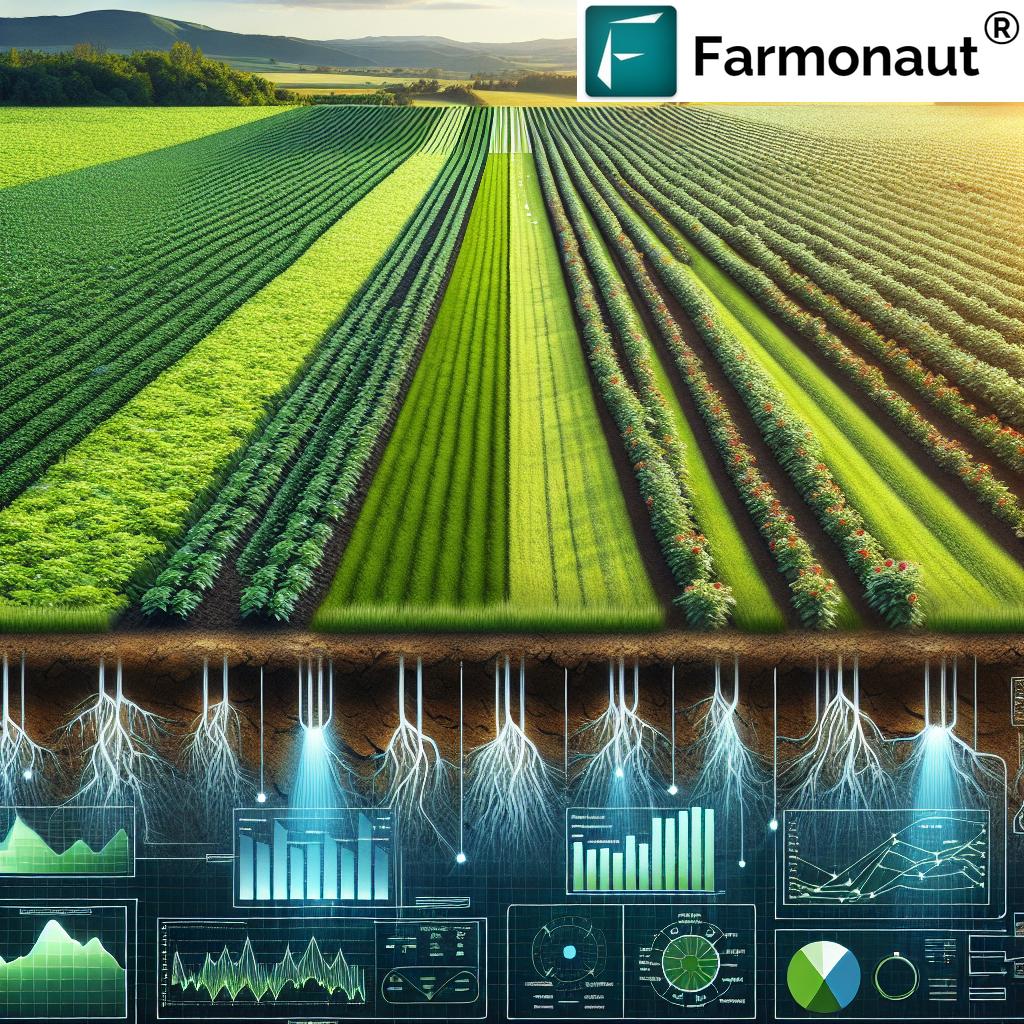
The transition to agriculture driven by data is a key differentiator in the agribot era. Advanced sensors, from multispectral cameras to LIDAR and hyperspectral imaging, allow robots to analyze crop health, soil moisture, and nutrient status with extreme accuracy.
- 🔬 Hyperspectral Sensing: Detects early signs of disease, deficiencies, or pest infestations before they become visible.
- 💧 Soil Moisture Probes: Guide irrigation scheduling and prevent both under- and over-watering.
- 📈 Data Integration: Enables predictive analytics for yields, input demands, and market timing.

- ✔ Autonomous Operations: 24/7 fieldwork regardless of time or labor constraints
- ✔ Field-Level Optimization: Apply treatments only where and when required
- 📊 Data-Driven Management: Enables real-time monitoring and smarter crop planning
- 🌿 Environmental Compliance: Supports lower pesticide and fertilizer use
- ⚠ Labor Relief: Addresses critical shortages in manual and seasonal workforce
Environmental Sustainability & Carbon Reduction
One of the most significant positive effects of agribots is their impact on environmental sustainability:
- 🌎 Minimized Chemical Use: By applying fertilizers and pesticides only where and when needed, robots reduce chemical leaching, groundwater pollution, and off-target impacts.
- 🌳 Preserving Soil Structure: Lightweight, compact agribots cause far less soil compaction than traditional heavy machinery, maintaining soil health and biodiversity.
- 💡 Monitoring Carbon Footprint: Automated, sensor-driven operations allow for better accounting and optimization of a farm’s carbon emissions. Farmonaut’s carbon footprinting tools offer real-time monitoring, empowering farmers to comply with regulations and adopt sustainable practices.
- 🌱 Reforestation: Specialized robots for tree planting accelerate reforestation, aiding in climate solutions and increasing farmable land productivity.
- 🌾 Precision seeding for uniform growth
- 💧 Reduced water and input waste
- 🔬 In-field disease & pest scouting
- 🌍 Lower overall environmental footprint
- 🤝 Enabling data-driven farm management
Labor Shortages Addressed by Agribots
Labor shortages have long been a critical challenge in agriculture. With younger generations increasingly moving towards urban sectors, farms face significant strain in recruiting skilled workers for repetitive, seasonal, and hazardous tasks. Agribots provide the crucial solution:
- 👷 Plugging Labor Gaps: Robots operate autonomously, taking over tiring, repetitive jobs.
- 🌙 Nighttime & Off-hours Work: 24/7 fieldwork is possible, regardless of human limitations.
- 🌡 Hazardous Conditions: Agribots perform in extreme environments, reducing risks to human health.
- 🎯 Consistency: Automated operations guarantee repeatable, high-efficiency outputs—improving yield and reducing post-harvest losses.

Comparison Table: Traditional Farming vs. Farming with Agribots (2025)
| Farming Aspect | Traditional Approach (Estimated Values) |
Agribot-Enabled Approach (Estimated Values) |
% Improvement with Agribots |
|---|---|---|---|
| Productivity (yield per acre) | 4 tons | 5.2 tons | +30% |
| Labor Costs (USD/acre) | $300 | $90 | -70% |
| Pesticide Use (kg/acre) | 12 | 5.5 | -54% |
| Water Consumption (liters/acre) | 12,000 | 7,800 | -35% |
| Sustainability Score* | 60/100 | 92/100 | +53% |
By integrating data-driven agribots with satellite monitoring, farms can create highly optimized production systems for both smallholders and industrial-scale farming.
Farmonaut: Satellite & AI-Driven Smart Farming Solutions
At Farmonaut, our mission is to make advanced, satellite-driven insights both affordable and accessible. Our platform empowers the full value chain—from individual farmers to governments—with:
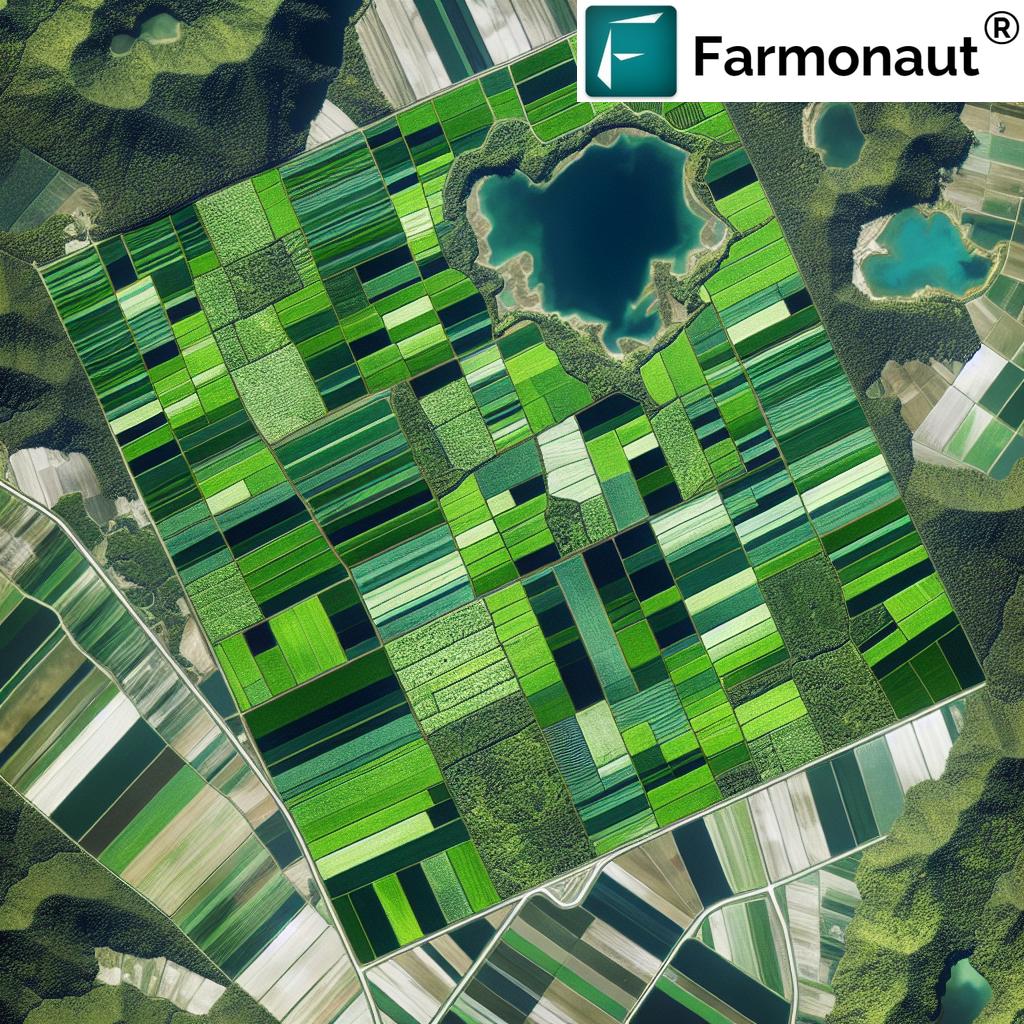
- Satellite-Based Monitoring: Multispectral imagery pinpoints crop health with NDVI, tracks real-time soil conditions, and enables remote resource management.
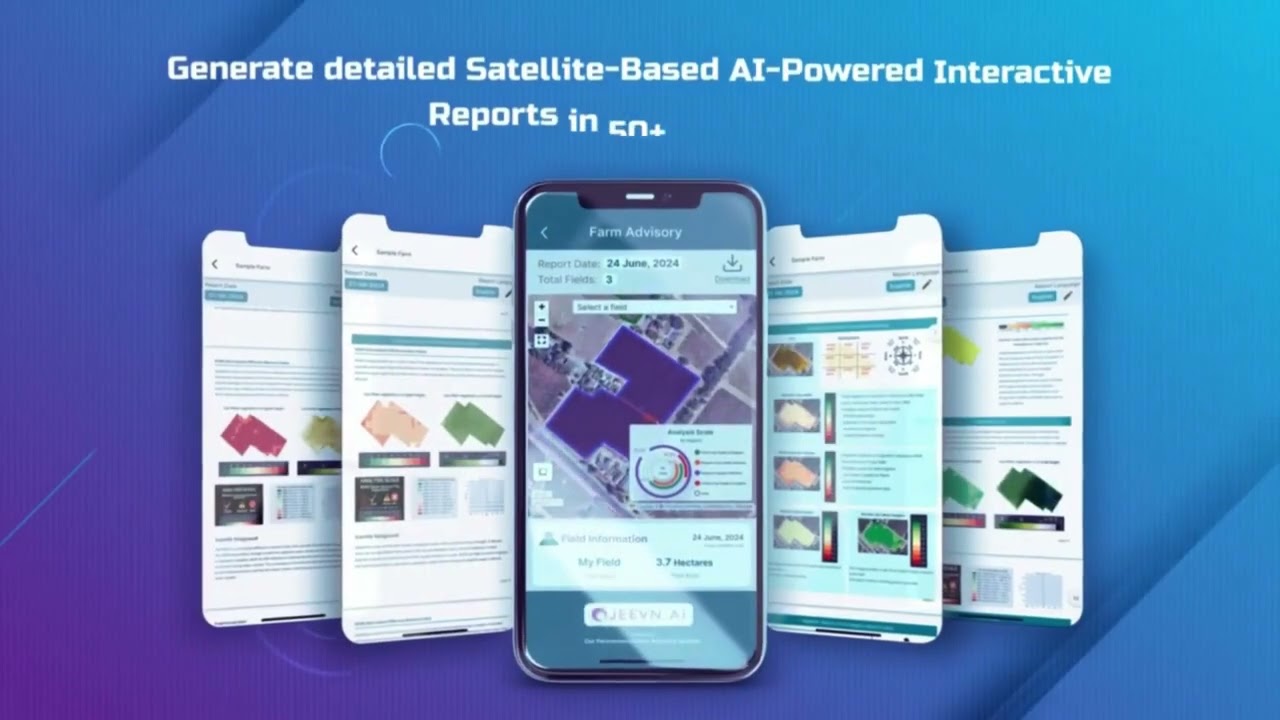
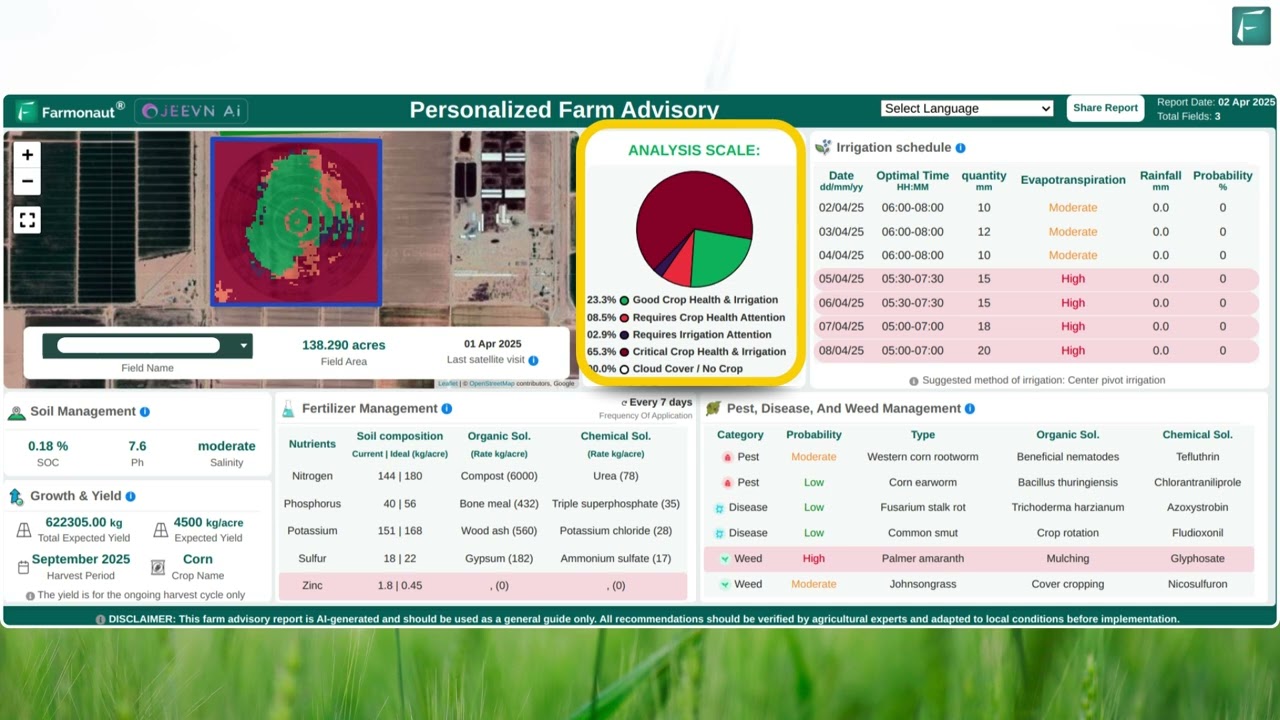
- AI-Powered Advisory (JEEVN AI): Our JEEVN AI Advisory System harnesses machine learning to interpret satellite data, offering real-time strategies and weather predictions—driving productivity and resilience in farming.
- Blockchain Traceability: Enhance transparency in agricultural supply chains. Learn about Farmonaut’s traceability solutions for secure, auditable product journeys from field to consumer.
- Fleet & Resource Management: Efficiently track agri machinery and logistics for better farm-wide operations, reducing downtime and input waste. Discover how our fleet management platform supports optimization.
- Environmental Impact Monitoring: Compliance-ready, data-rich analysis of your carbon, water, and overall environmental indicators.
- Bulk Management Solutions: Large landowners and agri-enterprises benefit from Farmonaut’s large-scale farm management tools built for monitoring, planning, and reporting across thousands of acres.



For developers seeking deeper integration, our satellite and weather API delivers seamless access to real-time agricultural intelligence. Get started with the Farmonaut API today or review our developer docs for detailed integration guidance.
Are you planning a crop loan or insurance program? Streamline financial verification and minimize fraud with Farmonaut’s satellite-based crop loan and insurance solutions.
Need intelligence for plantation and forestry advice at scale? Use Farmonaut’s plantation and forest advisory tools to plan, monitor, and sustain state-wide or corporate reforestation.
Challenges and Considerations for Widespread Adoption
While the promise of agribots is immense, there remain practical barriers to large-scale implementation:
- 💸 High Acquisition Costs: The upfront capital investment can be prohibitive, especially for smallholder farmers without access to group financing or leasing models.
- 🛠 Integration Requirements: Smoothly combining agribots with existing farm operations and infrastructure often requires adaptable and reconfigurable platforms.
- 🔒 Data Privacy & Security: As digital systems proliferate, cybersecurity and data protection become paramount to prevent abuse and unfair competition.
- 🧑🌾 Training & User Adoption: Successful rollout requires upskilling operators in both digital analysis and robotic workflow management.
- ⚠ Barrier: High initial costs – Mitigate via collective ownership and government subsidies.
- ⚠ Barrier: Digital literacy gap among farmers – Address with dedicated education & support programs.
- ⚠ Barrier: Data vulnerability – Prioritize robust cybersecurity and encrypted data transmission.
- ⚠ Barrier: Compatibility with existing equipment – Solution: Modular, upgradable designs.
Future Trends: What to Expect by 2026 and Beyond
The next phase for agribots and precision agriculture will be marked by:
- 🚜 Collaborative Robotics (Cobots): New-generation robots working alongside humans, combining the nuance of human decisions with robotic precision.
- 🔋 Battery & Materials Innovations: Longer-lasting, lighter, and more environmentally friendly power systems for increased field autonomy.
- 💻 Enhanced Machine Vision: Evolving sensing technology for even finer discrimination of crop stages, disease, and pest presence.
- 🧠 Superior AI Algorithms: Increased sophistication for predictive maintenance, yield forecasting, and even market-responsive decision-making.
- 🤝 Open Data Ecosystems: Farms seamlessly linking with government, market, and weather information for smarter, more resilient outcomes.
As 2026 approaches, the barriers to robotic agriculture will continue to fall, making agribots more affordable, efficient, and accessible—transforming farming into a resilient, high-value, and sustainable venture for future generations.
Frequently Asked Questions (FAQ): Agribots & Precision Agriculture
What is an agribot?
An agribot is an autonomous robot designed for agriculture. It integrates robotics, AI, and advanced sensors to perform essential farming tasks such as planting, weeding, fertilizing, harvesting, and crop monitoring—transforming traditional agriculture into a smart, data-driven system.
How do agribots enhance productivity and sustainability?
Agribots enhance productivity by automating labor-intensive tasks and optimizing input use through precise data analysis. They support sustainable practices by reducing chemical, water, and energy usage, as well as minimizing soil compaction and environmental footprint. This approach enables higher yields with fewer resources.
Can agribots help with plantation and forest management?
Yes. Specialized agribots and drones can autonomously plant and nurture thousands of saplings in reforestation projects, ensuring even spacing and improved survival rates. For advanced plantation intelligence, explore Farmonaut’s forest and plantation advisory solutions.
Are agribots suitable for smallholder farms?
The initial costs may pose a challenge, but new financing models, subscription services, and cooperative ownership are making agribotic technology increasingly accessible for smallholders, especially when combined with precision advisory apps and satellite data solutions like those we offer at Farmonaut.
What are the cybersecurity concerns with agribot-enabled farms?
As farming systems become digitized, protecting sensitive farm data and systems from cyberattacks is vital. Focus on platforms with end-to-end encryption, regular software updates, and strong data privacy practices.
Conclusion: The Robotic Revolution in Agriculture
From automated planting and targeted input application to real-time crop health monitoring and optimized resource use, agribots are revolutionizing agriculture in 2025 and powering the transition to precision agriculture for 2026 and beyond.
- 💡 Unprecedented productivity boost and resource efficiency help food systems meet the challenge of a growing global population.
- 🌍 Sustainable practices and environmental conservation are now achievable at any scale.
- 👨🌾 Labor shortages addressed: freeing up human talent for more skilled, value-added tasks in agri-enterprises.
- 🔗 Farm management becomes data-driven, predictive, and fully integrated across field, market, and regulatory systems.
- 🚀 As technology advances, agribots will become more affordable, efficient, and versatile—heralding a new era of smart, sustainable food production.
Join the next generation of farming—powered by AI, driven by data, and enabled by robotic systems. For accessible, real-time farm intelligence and next-gen crop management, explore the Farmonaut platform, and let’s shape the future of agriculture together.