7 Regenerative Practices to Boost Soil Health in 2026
“Regenerative practices can increase crop yields by up to 20% while reducing water usage by 15% in 2025.”
“Adopting sustainable soil management boosts farm profitability by an average of 12% through improved nutrient retention and reduced input costs.”
- Introduction: The Frontier of Regenerative Soil Health in 2026
- Why Regenerative Soil Health Matters for Sustainable Agriculture
- Core Principles of Regenerative Soil Health
- 7 Regenerative Practices to Boost Soil Health in 2026
- Comparative Benefits Table
- Water Stewardship & Carbon Sequestration
- Technology & Monitoring for Regenerative Agriculture
- Economic, Market & Policy Context
- How Farmonaut Supports Regenerative Soil Health
- Frequently Asked Questions (FAQ)
- Conclusion: Building Soil Resilience for 2026 and Beyond
Introduction: The Frontier of Regenerative Soil Health in 2026
The future of farming sits squarely on the health of our soils. As we move into 2026 and beyond, more agriculture systems are embracing regenerative practices that put soil health at the core of sustainable food production. This shift is driven by increasing climate pressures, rising input costs, and heightened consumer demand for healthy, transparent, and responsibly grown food.
With soil organic matter depletion and land degradation threatening global food security, the importance of nurturing our living soil becomes clear. Regenerative agriculture seeks to improve not only crop yields and farm profitability, but also to conserve water, sequester carbon, and build resilient farming systems. Implementing these systems at scale requires new management tools, measurable strategies, and coordinated knowledge-sharing across farming communities.
In this comprehensive blog, we’ll explore seven practical, scalable regenerative practices that will define soil health in 2026, highlight how precision technologies like those provided by Farmonaut support adoption, and give actionable insights for farmers, agri-businesses, and policymakers.
Why Regenerative Soil Health Matters for Sustainable Agriculture
- ✔ Soil is the foundation of agriculture—healthy soils drive higher yields, better nutrient management, and long-term farm profitability.
- 🌿 Regenerative health practices restore organic matter and biological diversity, supporting sustainable food systems.
- 💧 Water conservation becomes easier with improved soil structure, infiltration, and organic matter retention—critical as climate risk rises.
- 🌱 Carbon sequestration makes agriculture a climate solution, not just a source of greenhouse gases.
- 📈 Profitability increases when input costs drop, crop health improves, and markets reward sustainability with higher returns.
Regenerative soil health is not just a trend—it’s a necessity for future-proof farming that can meet global food demand and maintain ecosystem services for generations.
By 2026, farms that prioritize regenerative soil health consistently report 10–20% higher yields, reduced agrochemical dependence, and improved climate resilience.
Core Principles of Regenerative Soil Health
While every farm is unique, regenerative practices are grounded in universal principles that support soil health at every stage of crop production. Let’s break down these key concepts:
- 🌱 Biodiversity & Continuous Cover: Diverse rotations and living covers foster dynamic, biological networks in the soil, increasing resilience.
- 🛑 Minimized Tillage: Reducing soil disturbance protects organic matter, preserves microbial communities, and enhances infiltration.
- 🧑🔬 Organic Matter Management: Composting and returning varied residues build robust humus and soil structure.
- 🔬 Soil Biology: Fostering microbial networks—fungi, bacteria, nematodes—drives nutrient cycling and disease suppression.
- 🎯 Precision Nutrient Management: Use data-driven amendments for site-specific, efficient fertility that reduces environmental impact.
🎦 Regenerative Agriculture & Carbon Farming Explained

- 🌍 Regenerative farming increases biodiversity
- 💡 Higher soil organic matter means better water holding capacity
- 🦠 Enhanced microbial activity drives nutrient cycling
- ☔ Improved soil structure guards against erosion
- 📉 Reduced input costs improve farm profitability
7 Regenerative Practices to Boost Soil Health in 2026
Ready to transform your fields? Below, we detail the seven most effective, research-backed regenerative practices every forward-thinking farmer and agri-professional needs to know for 2026. Together, these strategies enable healthier soils, higher yields, and sustained sustainability and profitability.
1. Multi-Species Cover Cropping
Cover cropping is a foundational practice in regenerative systems. Planting diverse, multi-species covers during off-seasons, or in tandem with main crops, delivers:
- ✔ Organic matter boost as roots and biomass decompose
- 📊 Water infiltration and retention via improved soil structure
- ⚠ Suppression of weeds and disruption of pest cycles, reducing chemical needs
- 🌱 Leguminous species fix atmospheric nitrogen, naturally fertilizing soil
The timing of cover crop termination—and whether you roll, crimp, or mow—matters. Aligning termination just before cash crop planting maximizes nutrient capture and minimizes competition.
Watch: Unlocking Soil Secrets – Organic Matter & Carbon

2. Reduced or Conservation Tillage
Minimizing tillage preserves critical microbial networks and organic matter within soils. No-till or strip-till agriculture, when combined with conservation residue management (leaving stalks, stubble, or cover biomass intact), results in:
- ✔ Better soil aggregation—less compaction and greater porosity
- 📉 Decreased erosion and runoff, supporting water conservation
- 🦠 Improved habitat for soil biology—especially fungi, critical for nutrient transport
- 🌿 Reduced CO2 emissions by preventing soil carbon loss
Modern technology allows for precision tillage when needed, targeting only compacted zones or where crop establishment demands.
Watch: The Vital Importance of Soil in Agriculture

3. Dynamic Crop Rotations
Diversified crop rotations—moving beyond two-crop cycles—help break disease and pest cycles, improving overall soil biology and yield stability. Key benefits include:
- ✔ Enhanced nutrient cycling through alternating deep- and shallow-rooted crops
- 🌱 Biological nitrogen fixation by rotating with legumes
- 💪 Improved soil structure as varied root systems open new pathways
- 📊 Greater yield resilience in the face of climate variability
Integrate cash crops, cover crops, and specialty plants (like radish or clover) for maximum benefit.
- 🔄 Rotated crops disrupt pest habitats
- 🌿 Legumes add nitrogen naturally
- 🌾 Deep-rooted varieties mine nutrients from lower soil profiles
4. Organic Matter Enhancement: Composting & Green Manures
Enhancing soil organic matter is central to boosting fertility, water holding, and microbial life. Practices include:
- ✔ Returning crop residues after harvest rather than burning or removing
- ♻ Applying composted manure or green manures between seasons
- 🌱 Carefully sourcing compost to avoid weeds and pathogens
- 🧪 Biochar application where appropriate for long-term carbon sequestration
Focus on a slow, steady increase in soil organic matter percentage over multiple years for lasting impact.
Green manures—like vetch or crimson clover—can be dual-purpose, acting as cover crops and later as high-nitrogen input through soil incorporation.
5. Precision Nutrient & Amendment Management
Moving beyond “one-size-fits-all” fertilizer regimens, precision nutrient management leverages soil tests, tissue analytics, and smart decision support to:
- ✔ Match nutrient input to real crop need, reducing waste and runoff
- 📊 Utilize slow-release and bio-based fertilizers for improved nutrient cycling
- 🦠 Encourage beneficial microbial activity over chemical disruption
- 🎯 Prioritize site-specific amendments where degraded soils require targeted support
Data-driven approaches are enabled by satellite monitoring, AI-advisory systems, and digital mapping tools.
Watch: Unlocking the Power of Soil Organic Carbon

6. Agroforestry, Windbreaks & Hedgerows
Integrating perennials—trees, shrubs, and hedgerows—into crop fields delivers multi-layer benefits to soil health, water, biodiversity, and climate:
- ✔ Root systems stabilize soil, limiting erosion and runoff
- 🌳 Windbreaks reduce evapotranspiration and extreme weather impacts
- 🌼 Agricultural diversity boosts beneficial insect and microbial communities
- 🌎 Perennials sequester more carbon and organic matter, supporting long-term fertility
Agroforestry is landscape-scale regenerative agriculture, aligning perfectly with sustainability and climate-resilient goals.
Watch: Soil Organic Carbon & Farmonaut Solutions
Agroforestry and perennial integration not only enhance soil function but open new revenue streams from timber, nuts, and carbon credits—a smart bet for future-focused farms and agri-investors.
7. Real-Time Monitoring & Adaptive Management
No regenerative system is static. Regularly monitor key soil health indicators—organic matter, nutrient levels, pH, and biological activity—then adapt practices as data suggests. This approach leads to:
- ✔ Continuous improvement—measurable advances in soil health every season
- 📊 Reduced risk of nutrient imbalance or crop failure
- 💡 Informed, data-driven decisions rather than guesswork
- 📱 Technology-enabled tracking through sensors, satellite imagery, and AI analytics
Embrace precision agtech—like Farmonaut’s satellite tools—to optimize timing for cover crop termination, amendment application, and field management across your operation.
Comparative Benefits Table: 7 Regenerative Soil Health Practices
To support data-driven decisions, here’s a comparative look at the estimated impacts of each regenerative practice across organic matter content, water savings, yield improvements, and cost efficiencies on modern farms.
| Regenerative Practice | Description | Estimated Increase in Soil Organic Matter (%) | Estimated Water Savings (%) | Estimated Yield Improvement (%) | Estimated Cost Savings per Hectare (USD) |
|---|---|---|---|---|---|
| Multi-Species Cover Cropping | Diverse covers for year-round living roots, erosion control, N fixation. | 0.5–1.5 | 10–18 | 10–14 | $45–70 |
| Reduced/No-Till Practices | Minimal disturbance; maintains biological networks, organic matter, cover. | 0.4–1.0 | 9–15 | 8–13 | $35–60 |
| Dynamic Crop Rotations | Alternating legumes, cereals, deep-rooted crops for nutrient cycling. | 0.3–0.8 | 7–12 | 7–10 | $28–55 |
| Composting & Green Manures | Incorporates residues, organic inputs to replenish organic carbon. | 0.7–1.2 | 6–10 | 6–9 | $22–40 |
| Precision Nutrient Management | Soil/tissue testing, slow-release/bio-based amendments for efficiency. | 0.2–0.5 | 3–7 | 8–12 | $30–65 |
| Agroforestry & Hedgerows | Perennial trees/shrubs integrated to stabilize, diversify, and enrich fields. | 1.2–1.8 | 15–22 | 7–11 | $50–100 |
| Real-Time Monitoring & Adaptive Management | Tech-enabled, data-responsive soil health improvements season over season. | Variable (up to 2.0) | 10–25 | 10–20 | $60–120 |
Neglecting annual measurement of soil organic matter can lead to unseen degradation. Integrate routine soil testing for early warning and course correction.
Watch: Soil & Water—The Vital Connection

“Regenerative practices can increase crop yields by up to 20% while reducing water usage by 15% in 2025.”
“Adopting sustainable soil management boosts farm profitability by an average of 12% through improved nutrient retention and reduced input costs.”
Water Stewardship & Carbon Sequestration: The Twin Engines of Regeneration
Healthy soils hold more water, making modern farming more resilient to drought, reducing irrigation needs, and buffering against floods. Similarly, building carbon-rich organic matter not only improves fertility but also pulls atmospheric carbon back underground—a key climate solution. Implementation requires precision tools, especially at scale.
- ✔ Higher soil carbon = more water held per hectare = better drought survival
- 🦠 Microbial activity in high-organic matter soils boosts plant health and crop returns
- 💧 Modern irrigation pairs with structured soils for maximized efficiency
Watch: Satellite Soil Moisture Monitoring 2025

Technology & Monitoring for Regenerative Agriculture
Precision agriculture tools are key for implementing and scaling regenerative practices in 2026. Real-time field-level data enables:
- 📱 Remote sensing of crop health, soil moisture, and vegetation cover, allowing early response to stress
- 🎯 AI-based advisory for adaptive soil amendment, crop selection, and input management
- ⏱ Automated monitoring of field operations and compliance with sustainability targets
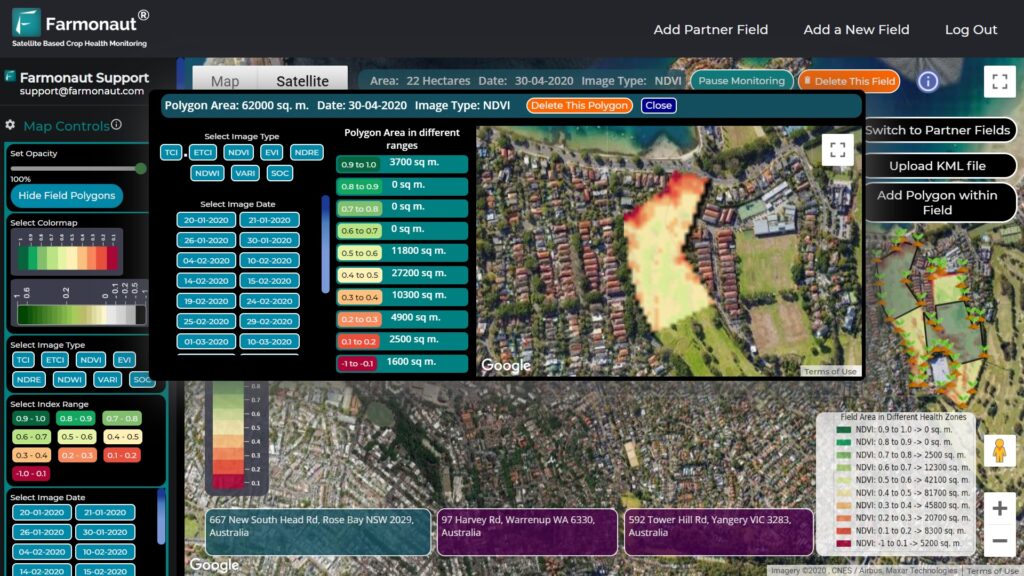
Farmonaut provides satellite-driven, affordable field insights for all scales—making soil health monitoring accessible and actionable via web, Android, and iOS apps:



Farms with large landholdings and complex operations can further benefit from Farmonaut’s Large Scale Farm Management platform for satellite field mapping, resource planning, and responsive action across thousands of hectares.
Interested in integrating satellite insights into your in-house system or app? Learn more about our Farmonaut API and Developer Docs to unlock seamless soil, crop, and environmental monitoring.
Watch: Farmonaut Web System Tutorial – Soil & Crop Monitoring

Modern satellite monitoring, like that offered by Farmonaut, enables farms to measure soil health progress remotely and affordably, making regular assessment routine, not burdensome.
Economic, Market & Policy Context for Regenerative Soil Health
- 💸 Access to Credit: Lenders are increasingly supporting regenerative practices with better terms, especially when farms can prove measurable soil health gains.
- 🏷 Product Traceability & Sustainability Certification: Blockchain-based tracking enables premium market access by validating regenerative claims end-to-end.
- 📈 Premium Markets: Exporters and retailers favor crops grown under sustainable, regenerative protocols—especially for markets in Europe and North America.
- 🧑🎓 Extension Services: Ongoing training, peer networks, and digital learning channels are essential to accelerate adoption of new soil health systems.
- 🛑 Carbon Footprinting: Market demand for measured carbon reductions is growing—regenerative soil management qualifies farms for climate-smart incentives and reporting.
To further optimize on-farm economics, consider leveraging satellite-based verification for crop loans and insurance to speed up disbursement and reduce risks.
Automated, transparent blockchain traceability is becoming a required passport for exporting to regulated, high-value markets by 2026—start building your system now.
How Farmonaut Supports Regenerative Soil Health & Sustainable Farming
At Farmonaut, our mission is to make satellite-driven, AI-backed soil health insights affordable and actionable for all. Whether you’re a smallholder one hectare at a time or managing hundreds of thousands of acres, our platform is here to support your journey in regenerative agriculture.
- 🛰 Advanced Satellite Monitoring: Real-time, multispectral mapping for vegetation, soil moisture, and organic matter.
- 🤖 AI-Based Jeevn Advisory: Adaptive, hyper-local advice on crop selection, nutrient timing, and risk reduction strategies.
- 🔗 Blockchain Traceability: Secure, tamper-proof tracking of crops, amendments, and soil management across the supply chain.
- 📱 Web & Mobile Accessibility: Access insights anytime via web, Android, or iOS.
- 🛡 Environmental Impact Monitoring: Carbon tracking, water use analytics, and ecosystem reporting to comply with evolving regulations and market demands.
Ready to transform your soil health journey? Explore our Farm Management, Fleet Management, and Crop, Plantation & Forest Advisory solutions to increase productivity, profitability, and sustainability.
As regulators and buyers increasingly require verifiable soil, carbon, and water health data, investments in agtech platforms like Farmonaut offer growing appeal and strong returns.
Frequently Asked Questions (FAQ)
Q1: What is the difference between soil health and soil fertility?
Soil health is a holistic measure of the soil’s ability to function as a living ecosystem—supporting plants, animals, and microbes. Soil fertility focuses primarily on nutrient levels for plant growth. Regenerative practices address both by building organic matter, structure, and biology alongside nutrients.
Q2: How does Farmonaut help me monitor regenerative practices?
Our platform lets you track crop health, soil moisture, and vegetation cover via satellite on any device. It powers real-time decision support, detailed field history, and compliance reports for certifying sustainability.
Q3: What is precision nutrient management and why does it matter?
Precision nutrient management means matching amendments to what each field actually needs, using technology like soil mapping, tissue analysis, and remote sensing. This approach maximizes yield, conserves resources, and reduces environmental impacts.
Q4: Can regenerative practices be used on small farms?
Yes! Even small farms can benefit greatly—multi-species cover crops, composting, and reduced tillage are adaptable at any scale and enhance both yields and soil quality.
Q5: Where can I learn more or get technical support on Farmonaut apps?
Visit our app portal for web, Android, and iOS, or consult our API developer documentation for integration support.
Conclusion: Building Soil Resilience for 2026 and Beyond
Regenerative soil health is the undisputed frontier of modern, sustainable farming. By integrating proven regenerative practices—cover cropping, reduced tillage, dynamic rotations, organic matter enrichment, precision nutrient management, agroforestry, and technology-enabled monitoring—we restore our soils, improve crop yields, conserve water, and ensure long-term farm profitability.
The journey is measurable, scalable, and ever-evolving. As climate, market, and regulatory pressures increase, those who invest in soil health today are building resilient, thriving agri-businesses for tomorrow. With the support of advanced tools and insights from Farmonaut, the path to a healthier, more sustainable future is clearer than ever.
Take your next step towards regenerative agriculture—start monitoring, measuring, and managing your soil health today for a better harvest tomorrow.