3D Printing in Agriculture: 7 Powerful 2026 Gains
“3D printing delivers 7 powerful agriculture gains by 2026, from custom parts to smarter irrigation tools.”
3d printing in agriculture is no longer a niche experiment. It is becoming a practical layer of modern farming operations. Across horticulture, row-crop systems, nurseries, greenhouse production, livestock, and agroforestry, farms are now using printing to create custom parts, repair equipment, improve irrigation, and speed up maintenance. In 2026 and beyond, the value is clear: faster access to tools, lower replacement lead times, less idle machinery, and better adaptation to local conditions.
The reason this matters is simple. Agricultural systems are full of small but essential components: fittings, brackets, caps, clips, spacers, sensor housings, mounting plates, seals, adapters, and repair inserts. A missing part can stop a pump, delay transplanting, affect ventilation, or sideline a tractor. Traditional supply chains are often slow, especially in remote locations or during supplier backlogs. Additive manufacturing changes that equation by enabling local, on-demand production of highly customized farm hardware.
In this blog, we will unpack seven major gains, explain where they fit in daily farm work, and show how thoughtful design, material selection, testing, and safety make the difference between a useful printed object and a reliable farm asset. We will also show how digital monitoring can support these workflows. For operations that want satellite-based crop and resource visibility, Farmonaut’s web and mobile platform provides satellite imagery, AI advisory, blockchain traceability, and resource management tools that can complement on-farm innovation.
Table of Contents
The fastest wins in 3d printing in agriculture usually come from low-cost, low-risk items such as clamps, fittings, caps, sensor housings, and spare brackets rather than highly stressed drivetrain parts.
Start with one recurring pain point: a broken irrigation adapter, a cracked vent fitting, or missing row-cover clips. When farms print repeat-use items, the return on effort becomes visible quickly.
Do not assume every factory part should be replaced by a printed version. For safety-critical or heavily loaded equipment, standard certified components remain essential.
The strongest adoption signal is not novelty. It is repeatability: lower downtime, lower spare inventory, and faster field repairs across multiple farm systems.
When farm teams combine printed replacement parts with better monitoring of crop stress, water demand, fleet movement, and resource use, they improve both physical resilience and decision speed.



Why 3D Printing in Agriculture Matters More in 2026
By 2026, farms are under pressure from labor constraints, input volatility, climate variation, and stricter expectations around efficiency and sustainability. That means any technology that can reduce delays, streamline repairs, and support local adaptation becomes attractive. 3d printing agriculture stands out because it does not require a full redesign of farm systems. Instead, it fits around existing infrastructure. It enables farmers to create tailored fixes and accessories for present-day pumps, lines, frames, sensors, planters, nursery benches, and ventilation systems.
This is especially useful where farms work under unique field geometry, non-standard layouts, mixed crop systems, or specialized greenhouse benches. Off-the-shelf parts are often built for average conditions. Real farms are rarely average. Soil texture changes, row spacing differs, tunnel widths vary, and older machines may require unusual adapters. With rapid prototyping and localized printing, those mismatches can be solved much faster.
The other major reason is resilience. Every farm depends on small, affordable pieces that are hard to source quickly when they fail. A low-cost bracket, gasket, or nozzle can create expensive interruptions. By producing selected replacement components on-site or near-site, farms can cut waiting time, lower transport dependency, and keep daily work moving. This does not replace traditional manufacturing. It complements it. That is the key strategic role of 3d printing in agriculture in 2026 and beyond.
What makes this shift practical now?
- ✔ Lower hardware costs have made desktop and workshop-scale printing more accessible.
- ✔ Better materials such as PETG, nylon blends, ABS, and selected composites now offer stronger outdoor performance.
- ✔ Faster design cycles let farms test a bracket, fitting, or insert in real conditions and revise it quickly.
- ✔ Digital files are easier to store than large physical spare inventory.
- ✔ Local production minimizes delays in remote and weather-sensitive regions.

For farms that want a digital command layer on top of physical operations, Farmonaut API can help bring satellite and field intelligence into existing systems. Teams building custom hardware dashboards, maintenance workflows, or agronomic tools can also review the API developer docs to understand how satellite data and weather information can support planning.
The 7 Powerful 2026 Gains of 3D Printing Agriculture
Now let us move from concept to practical value. The seven gains below show how does 3d printing benefit agriculture? Each one addresses a specific operational pain point and highlights where printed tools, parts, and components can create measurable improvement.
1) Custom replacement parts that slash downtime
The first and most immediate gain is on-demand repair. Farms constantly need replacement handles, clamps, vent caps, hose fittings, filter holders, pump adapters, cable guides, and protective covers. These are not glamorous, but they are often essential. If one small piece breaks during planting, irrigation, or harvest prep, a machine can remain idle for hours or days.
With 3d printing in agriculture, a farm can design or scan a broken item, adjust its geometry, and print a usable substitute quickly. Examples include bespoke wrench handles, latch components, guards, valve knobs, feeder clips, and small conveyor guides. This lowers the need to keep large spare inventory and helps operations manage supplier backlogs.
The value is strongest in remote locations, mixed-equipment farms, and older facilities with discontinued parts. In those settings, localized production can reduce waiting time dramatically. Farms do need discipline, though: printed parts should be used intelligently, especially where loads, pressure, heat, or contact with chemicals are significant.
Why this gain matters
- 📌 Reduces downtime caused by missing low-cost parts.
- 📌 Improves maintenance flexibility for legacy systems.
- 📌 Supports local repair culture instead of “wait and replace.”
2) Tailored irrigation tools and water-management fittings
Water systems are full of small components that vary by crop, slope, pressure, and field arrangement. This makes irrigation one of the most practical areas for 3d printing agriculture. Farms can create drip emitters, micro-irrigation connectors, line stabilizers, mulch-tube clips, custom elbows, nozzle housings, channel spacers, and repair couplers that fit unique layouts.
In drought-prone regions, this matters even more. Precision water delivery depends on system integrity. A poorly fitting standard adapter may leak, loosen, or force awkward line routing. A customized and tailored fitting can improve flow consistency and support better water management. For high-value crops, that can translate into stronger plant health and lower waste.
These printed fittings are also useful in trial blocks and specialty crop production where farms often change spacing or line arrangements. Rather than ordering small runs from different suppliers, teams can iterate in-house and move faster.
Visual List: Best irrigation items to print first
- 💧 Drip line adapters for awkward geometry
- 💧 Mulch-tube clips for stable line placement
- 💧 Nozzle guards and flow-direction accessories
- 💧 Spacers for consistent emitter positioning
Visual List: Irrigation risks to watch
- ⚠ Pressure mismatch in thin-walled designs
- ⚠ Chemical exposure from fertigation solutions
- ⚠ UV damage if the wrong material is selected
- ⚠ Leak paths caused by poor print tolerances

Where water planning is linked with broader resource decisions, Farmonaut’s carbon footprinting tools can help users track environmental impact with actionable data on emissions and resource use. That matters because efficient irrigation and smarter input deployment increasingly sit inside wider sustainability goals.
3) Greenhouse optimization through custom brackets, seals, and airflow accessories
Greenhouse operations depend on control. Airflow, vent movement, humidity balance, light distribution, and equipment placement all affect crop performance. That makes them ideal environments for printed brackets, gaskets, seals, end caps, fan adapters, duct connectors, cable clips, sensor mounts, and ventilation louvers.
In controlled environments, even small mechanical improvements can help optimize temperature, humidity, and airflow. A custom vent latch or fan transition piece can reduce leakage. A printed light-diffuser accessory can help distribute illumination more evenly. A cable holder can keep probes and cameras in the correct location for better crop monitoring.
Because greenhouse systems often use fixed benches and repeated geometry, once a useful part is validated, it can be reproduced consistently. This supports scale. It also supports seasonal upgrades without large capital outlays. Over time, many small printed improvements can create noticeable operational optimization.
Examples of greenhouse components suited to printing
- ✔ Vent caps and channel end pieces
- ✔ Mounting brackets for fans, ducts, cameras, and probes
- ✔ Lightweight accessories for light control or cable routing
- ✔ Custom seals and gaskets for climate-control hardware
4) Seedling trays, propagation inserts, and nursery handling tools
Nurseries and transplant operations deal with diversity. Different cultivars, rooting habits, stem fragility, tray densities, and greenhouse bench dimensions create many special requirements. Here, 3d printing in agriculture offers real value through seedling trays, propagation inserts, clamshells, propagator domes, transplant guides, label holders, and crop-specific handling accessories.
Standard trays are useful, but they do not always match the exact growth stage, spacing, or root volume a grower wants. Printed inserts can be designed for specific crop needs. For example, a farm may want gentler support for delicate stems, different drainage geometry, or custom spacing for a trial variety. That is where printed nursery tools shine.
Another gain is material waste reduction. When tray inserts and handling aids are designed precisely for their job, they can reduce breakage during transplanting and improve worker ergonomics. In nurseries handling many small batches, that flexibility matters. It also supports cleaner transitions between crop cycles because accessories can be washed, revised, or reprinted as needed.
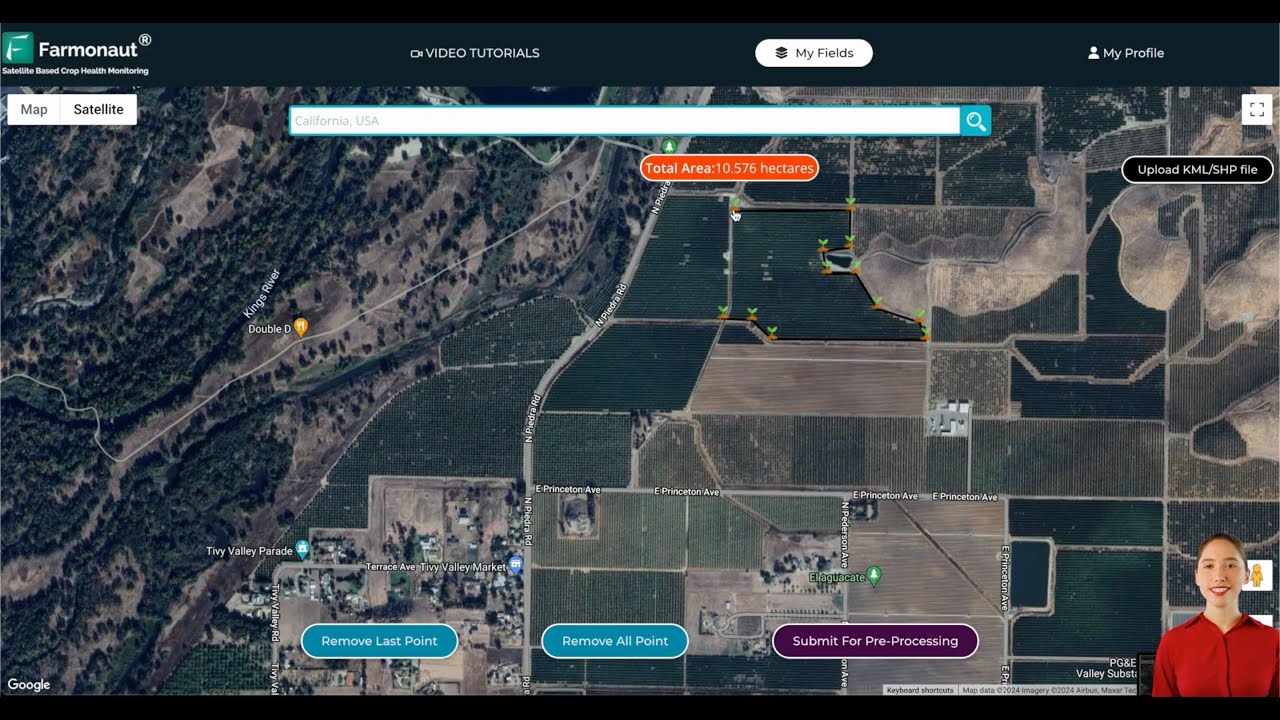
Large operations managing many blocks, nursery zones, or dispersed production units may also benefit from Farmonaut’s large-scale farm management tools. These tools are designed to support monitoring and resource planning across broader operations, which can complement the physical customization made possible by printed nursery components.
5) Sensor housings, brackets, and precision farming hardware
One of the most important long-term gains is the role of 3d printing agriculture in precision farming. Modern farms use sensor nodes, weather accessories, camera mounts, soil moisture probes, crop-monitoring boxes, telemetry cases, and support brackets for machinery or field rigs. These are often hard to source in the exact dimensions required. Printed housings and mounts solve that problem.
With additive manufacturing, farms and ag-tech teams can build weather shields, cable strain-relief clips, probe holders, camera mounting plates, and protective enclosures that integrate with existing systems. This accelerates development and enables prototyping for drones, ground rigs, and even autonomous tractors. Instead of waiting for machined one-off parts, they can test geometry in the field, revise quickly, and redeploy.
This is a major reason 3d printing in agriculture is reshaping farm hardware. Precision systems evolve fast. They need hardware that can keep up. Printing reduces the friction between idea and deployment.
To pair physical sensor hardware with a stronger data layer, we at Farmonaut provide satellite-based monitoring and AI advisory through Android, iOS, web, and API access. Our platform uses multispectral satellite imagery for vegetation health, soil conditions, and resource planning, which can complement on-farm sensor installations rather than replace them.
6) Drone accessories and lightweight field hardware
As drone and robotic systems become more common in crop scouting and spraying workflows, farms need highly lightweight, balanced, and easily replaceable accessories. Examples include camera guards, battery organizers, landing leg protectors, payload clips, cable channels, and custom brackets for monitoring devices. Here, 3d printing is particularly useful because geometry can be tuned for low weight and exact fit.
The same logic applies to field hardware around autonomous systems and mobile platforms. Printed sensor poles, small mast clamps, shielded housings, and modular attachments can be produced quickly. This reduces experimentation cost and shortens the route from concept to working tool.
However, balance and structural testing are essential. A drone accessory with poor weight distribution can hurt flight performance. A thin bracket exposed to vibration may fail early. So the real gain here comes from disciplined prototyping, not just fast fabrication.
7) Livestock equipment components and durable wash-friendly farm tools
Livestock systems have many repetitive needs that suit custom fabrication. Farms can produce feeder inserts, waterer components, durable tags, spacing aids, sorting accessories, sample holders, and even certain non-critical biopsy or handling tools where hygiene, geometry, and species-specific fit matter.
Printed livestock accessories are useful because group size, pen design, and animal behavior vary by farm. A standard part may be functional but not optimal. A customized feeder divider or flow guide can improve animal access. A printed holder or clip can make cleaning easier. A tag mount or enclosure can support better traceability and workflow consistency.
Material choice matters a great deal in livestock settings. The right polymer must be washable, durable, and resistant to repeated handling. Surfaces should be designed to limit dirt traps. When used carefully, printed livestock parts can support welfare, reduce nuisance failures, and streamline routine operations.
“At 2025 scale, 3D-printed farm components reduce downtime while improving greenhouse efficiency with on-demand replacements.”
Use Case vs. Estimated Farm Impact in 3D Printing in Agriculture
The table below translates the seven gains into a more scannable business view. All figures are estimated ranges, not guarantees. Actual results depend on design quality, printer capability, labor skill, crop value, environmental exposure, and how often a printed part replaces shipping delays or workshop machining.
| 3D Printing Application | Farming Problem Solved | Estimated Cost Savings (%) | Estimated Downtime Reduction (%) | Estimated Production Time Reduction | Suitable Farm Type | 2026 Adoption Potential |
|---|---|---|---|---|---|---|
| Custom replacement parts | Broken clips, handles, vent caps, adapters, and non-standard spares delay repairs | 15–30% | 20–45% | From days/weeks to hours or 1–2 days | Row crop, mixed farms, remote operations, machinery-heavy farms | Very High |
| Irrigation nozzles and fittings | Leaks, poor fit, awkward line routing, crop-specific geometry mismatch | 10–25% | 15–35% | From custom orders to same-day prototyping | Horticulture, orchards, specialty crops, water-stressed regions | High |
| Greenhouse brackets, gaskets, and fan adapters | Climate-control inefficiencies, damaged mounts, airflow imbalance | 12–28% | 10–30% | From supplier wait time to in-house batch production | Greenhouse farming, nurseries, controlled environments | Very High |
| Seedling trays and transplant inserts | Crop-specific propagation needs not served by standard trays | 10–20% | 5–18% | From outsourced small runs to rapid in-house iteration | Nurseries, horticulture, seedling businesses | High |
| Sensor housings and mounting brackets | Precision hardware does not fit existing poles, rigs, or enclosures | 15–35% | 10–25% | From machining delays to rapid prototyping cycles | Precision farming, research plots, large-scale farms | Very High |
| Drone accessories and lightweight hardware | Need for balanced, low-weight custom mounts and guards | 10–30% | 8–20% | From multi-week redesign loops to same-week testing | Tech-enabled farms, scouting operations, ag robotics teams | Medium to High |
| Livestock equipment components | Pen-specific feeders, waterers, tags, and handling accessories are hard to source | 10–25% | 10–22% | From catalog dependency to local batch printing | Dairy, poultry, swine, mixed livestock farms | High |
Five headline takeaways from the impact table
- ✔ Custom replacement parts often deliver the fastest payback because they directly target unexpected downtime.
- 📊 Greenhouse components show strong adoption potential because repeat geometry makes printed runs efficient.
- 💧 Irrigation fittings matter most where water-use efficiency and crop-specific line routing are critical.
- 🛰 Sensor housings connect physical customization with the growth of precision agriculture systems.
- ⚠ Drone and livestock applications require stricter attention to balance, washability, and material suitability.

For organizations that need more visibility across crops, machinery, and resource flows, Farmonaut’s fleet management tools can support vehicle usage, logistics planning, and operational efficiency. In practice, this can complement printed spare strategies by improving how teams dispatch service vehicles, track repair movement, and manage equipment use.
Materials and Sustainability in 3D Printing Agriculture
Materials determine whether a printed part becomes a useful farm asset or a short-lived experiment. Farm conditions are hard on polymers. Sunlight, moisture, dust, repeated washing, fertilizer salts, chemical sprays, heat, and mechanical stress all change performance. That is why material selection should always match the application.
Common materials and where they fit
PLA is easy to print and useful for quick prototyping, fit checks, training aids, and low-stress indoor accessories. It is not usually the first choice for hot outdoor exposure. PETG is often better for general farm use because it offers stronger moisture resistance and decent durability. ABS can provide useful toughness and heat resistance when printing conditions are controlled. Nylon blends are valuable for higher-wear items, especially when flexibility and impact resistance matter.
For more demanding use, composites and reinforced materials can offer improved stiffness or durability. In some industrial contexts, printed aluminum or other metal components may be suitable for structural or higher-stress applications, though this depends on equipment access and part requirements.
Material selection checklist
- ✔ UV exposure: Will the part sit in direct sun?
- ✔ Chemical compatibility: Will it contact fertilizers, disinfectants, oils, or crop protection products?
- ✔ Load and impact: Is it decorative, supportive, or stress-bearing?
- ✔ Washability: Must the part be cleaned regularly in a nursery or livestock setting?
- ✔ Food-contact needs: Are food-grade materials required for plant or handling use?
Sustainability advantages of 3d printing in agriculture
One of the less discussed strengths of 3d printing in agriculture is its fit with circular and low-waste thinking. On-demand production means farms do not need to overstock every possible spare. That can reduce dead inventory and storage waste. It also means fewer emergency shipments and less transport for small items.
Designs can be optimized to use less material, and worn items can sometimes be redesigned and reprinted instead of forcing the disposal of larger assemblies. Where suitable, recyclable or bio-based filaments may offer added benefits. Design-for-disassembly principles also help. If a mount is made from replaceable sub-parts, only the worn piece needs to be remade.
At a broader planning level, Farmonaut’s blockchain-based traceability tools are relevant for agricultural supply chains that need more transparency and secure record-keeping. While traceability is separate from printing, both reflect the same broader shift toward smarter, more accountable production systems.

Design and Deployment Rules for 3D Printing in Agriculture
Printing a part is easy. Deploying a part that survives the season is harder. The best farm uses of additive manufacturing follow a simple process: identify a recurring problem, define the operating conditions, create a first design, test it in real use, revise it, and only then standardize it for repeated production.
1) Customize for crop-specific and site-specific needs
Crop systems differ by row width, canopy height, irrigation geometry, tray spacing, greenhouse bay width, and nursery workflow. Good printed designs respect those realities. A mount for cameras in tomatoes may not suit peppers. A probe holder for one soil type may not fit another. The power of customization is the ability to tailor geometry to what the crop and site actually require.
2) Substitute intelligently, not blindly
Some printed items are perfect as adapters, covers, clips, spacers, or holders. Others should remain factory-made and certified. As a rule, avoid replacing essential, high-stress, high-heat, or safety-critical machine parts unless there is proper engineering validation. 3d printing agriculture works best as a complement to standardization, not a reckless replacement for it.
3) Prototype in the field
Real farm conditions reveal issues that workshop tests miss. Vibration, mud, UV, operator handling, repeated wash-down, and accidental impacts can all change part life. That is why testing should happen in the actual work setting. Print, test, inspect, refine, and then print again. This short loop is exactly what makes additive manufacturing valuable.
4) Build for maintenance
Designs should be easy to install, inspect, and clean. Sharp crevices that trap dirt are a problem in nurseries and livestock facilities. Overly complex threaded designs may fail in dusty conditions. Simpler geometry usually improves long-term performance.
5) Respect IP, safety, and regulatory fit
If a farm uses third-party files, it should verify usage rights, compatibility, and intended purpose. More importantly, materials must be checked against sterilization routines, exposure to agricultural chemicals, and applicable safety expectations. Printed tools and components should not introduce new risks.
Deployment checklist before full-scale use
- Define the problem: What failure, delay, or mismatch are we solving?
- Set limits: Load, heat, water, UV, chemical contact, wash cycles.
- Choose the right material: Prototype material is not always deployment material.
- Test in actual conditions: Not just indoors.
- Document the file: Keep version control for future repairs.
- Train staff: Installation and replacement should be simple.

For agricultural finance and risk workflows, Farmonaut’s crop loan and insurance verification tools use satellite-based verification to support decision-making and reduce fraud risk. This is relevant because resilient farms increasingly combine physical efficiency improvements, like printed spares, with stronger digital records and monitoring.
How Digital Monitoring Supports 3D Printing in Agriculture
3d printing in agriculture solves a physical problem: the need for custom and rapid-access objects. But farms also need a digital layer that helps them decide where those objects will have the most value. That is where satellite monitoring, AI advisory, traceability, and resource management become relevant.
We at Farmonaut focus on that digital layer. Our platform delivers satellite-based monitoring, AI-based advisory through Jeevn AI, blockchain traceability, fleet and resource management, and environmental impact tracking through Android, iOS, web/browser, and API access. These tools can help users identify crop stress, monitor vegetation health, review soil conditions, manage field operations, and track environmental impact. None of this replaces on-farm fabrication. Instead, it helps teams prioritize where physical improvements and repairs matter most.
For example, if a farm identifies repeated water stress in a block, printed irrigation fittings, sensor housings, or line management accessories may become a priority. If a greenhouse zone shows recurring climate-control imbalance, printed brackets, seals, fan adapters, or probe mounts might be worth testing. If a fleet workflow creates costly delays, better dispatch and resource visibility can support faster installation of printed spares.
This is why 2026 farm innovation is increasingly modular. One technology does not solve everything. Instead, farms combine precise digital insights with practical physical fixes. That is often the most scalable path.
Where this digital-physical combination is strongest
- ✔ Greenhouse farming: printed climate-control accessories plus satellite and AI-supported planning
- ✔ Field agriculture: spare parts, row-cover clips, and probe mounts paired with crop health monitoring
- ✔ Forestry and agroforestry: grafting aids, pruning guides, seedling spacers, and plantation advisory tools
- ✔ Livestock systems: wash-friendly components supported by operational visibility and traceability logic
- ✔ Mining and remediation sites: printed field kits and sampling fixtures where supply chains are limited

Forestry and plantation users looking for broader advisory support can explore crop, plantation, and forest advisory access via Farmonaut. This aligns well with forestry and agroforestry use cases where printed planting spacers, stake fittings, nursery handling tools, and establishment aids can improve field deployment.
Sector-by-Sector Outlook for 2026 and Beyond
Horticulture and nurseries
This sector is likely to remain one of the biggest adopters of 3d printing agriculture because it values customization, quick iteration, and small-batch efficiency. Expect more use of tray inserts, label systems, transplant guides, grafting aids, and crop-specific handling devices.
Greenhouse farming
Controlled environments reward precision. Printed airflow accessories, vent parts, cable clips, sensor housings, and light-management aids are likely to keep expanding because they are easy to validate and reproduce.
Field agriculture
Large row-crop and mixed operations will continue using printed spares, monitor mounts, row-cover clips, and machine adapters, especially where long supply chains increase repair delays. Tractors, planters, and pumping systems all contain many non-critical parts suited to rapid replacement.
Forestry and agroforestry
Expect growing use in nursery operations, bareroot handling, pruning guides, stake connectors, tree-planting markers, and establishment aids. These environments benefit from practical rugged items rather than decorative prints.
Livestock
The strongest opportunities will likely be in pen-specific accessories, water and feeder components, identification supports, and washable utility items that simplify routine work.
Adjacent relevance: mining and minerals
Though outside pure crop production, remediation and site-monitoring operations can use printed spares, sampling holders, and portable lab fixtures in isolated areas. This adjacent relevance shows how additive manufacturing supports operational resilience where logistics are difficult.
FAQ: How Does 3D Printing Benefit Agriculture?
1) How does 3d printing benefit agriculture in simple terms?
It allows farms to make customized parts, tools, and accessories on demand. That can reduce downtime, lower spare inventory, improve fit for unique farm systems, and speed up repairs or prototypes.
2) What are the best first uses of 3d printing in agriculture?
The safest first uses are usually low-risk components such as hose fittings, line clips, brackets, covers, probe holders, tray inserts, fan adapters, and non-critical repair accessories.
3) Can 3d printing improve irrigation efficiency?
Yes. Farms can print tailored irrigation fittings, drip emitters, spacers, and repair couplers to fit unique line geometry. This can help limit leaks, improve flow routing, and support better water use.
4) Is 3d printing in agriculture only for greenhouses?
No. It is useful in greenhouse systems, open field farming, livestock, nurseries, forestry, and agroforestry. The exact benefit depends on the problem being solved.
5) Which materials are commonly used?
PLA, PETG, ABS, and nylon blends are common. Some applications also use reinforced composites or metals. The right choice depends on UV, heat, chemicals, washability, and structural demands.
6) Can farms print every replacement part they need?
No. Printed items are best for selected accessories, adapters, and non-critical spares. Safety-critical, high-load, and regulated components should be treated with extra care and often remain better suited to certified standard parts.
7) How do digital tools fit into 3d printing agriculture?
Digital tools help farms decide where printed fixes matter most. We at Farmonaut provide satellite-based monitoring, AI advisory, blockchain traceability, and resource management tools that can complement printed hardware by improving visibility and planning.
Conclusion: Why 3D Printing in Agriculture Will Keep Growing
The biggest promise of 3d printing in agriculture is not that every farm becomes a manufacturer. It is that farms gain the ability to respond faster, adapt smarter, and waste less. That shift matters. Agriculture is full of small mechanical needs that add up to major operational outcomes. A missing clip, broken nozzle, cracked bracket, or poor-fitting tray insert can cause real cost. Additive manufacturing gives farms a practical way to respond.
By 2026 and beyond, the strongest gains will likely continue to come from seven areas: custom replacement parts, irrigation fittings, greenhouse optimization, nursery and seedling trays, sensor housings, drone accessories, and livestock equipment components. These use cases work because they align with the real logic of agriculture: local variability, urgent repair needs, and the constant push for better efficiency.
At the same time, successful adoption depends on discipline. Material choice, part geometry, real-world testing, safety review, and smart substitution all matter. Farms should print what is practical, not simply what is possible.
That is also why the future is not only about physical objects. It is about combining local fabrication with better data. We at Farmonaut contribute to that future by making satellite-driven insights, AI-based advisory, traceability, and resource management more affordable and accessible through web, mobile, and API tools. In a modern operation, printed parts keep things moving, while data helps decide where the next improvement should happen.
If there is one clear lesson from the rise of 3d printing agriculture, it is this: the farms that gain the most are not always the ones with the most machinery. They are the ones that solve small problems quickly, adapt to local conditions intelligently, and build systems that stay resilient when supply chains or weather become unpredictable.
Final Summary
3d printing in agriculture is reshaping modern farm operations by making it easier to produce custom tools, parts, and repair components on demand. Its impact spans horticulture, row crops, greenhouse systems, livestock, and agroforestry by improving repair speed, reducing spare delays, supporting precision hardware development, and advancing more sustainable practices. Combined with strong material selection, careful design, and digital monitoring, it offers a practical route to higher farm resilience in 2026 and beyond.
Note: Estimated ranges in this article are directional and depend on deployment quality, local conditions, part complexity, and operating environment.